We will take a break from our usual around here to talk about cars.
Grok tells me that about 1.0%-1.2% of all cars in the United States are ever driven beyond 200,000 miles. In other words, 99% of cars are scrapped before reaching that mileage.
This is because, by that point, too many things are going wrong, and it doesn’t make economic sense to keep fixing them. You just buy a new one. I have driven two cars to 200,000 miles, and in both cases, it would have been better if they had been scrapped before then.
With this experience, I concluded that the cost of driving an old car and the cost of driving a new car aren’t that much different. Driving costs money, whether an old or a new car. Let’s say you buy a used car with 120,000 miles on it for $8000 dollars. You drive it for three years, 15,000 miles a year, 45,000 miles total, and after three years it is a $2000 car (or less) with 165,000 miles on it. The depreciation for those three years was $2000 per year. Plus, you put $2000 a year into repairs, on top of regular maintenance of things that wear out, like tires or brake pads. The cost is $4000 per year.
Now buy a brand new car, which, with taxes and everything else, comes to $36,000. You drive it for eight years, 15,000 miles a year, or 120,000 miles. Then, you trade it in for $6000. Your total cost, including all taxes and fees, is $30,000 over eight years, or $3,750 per year. Not much breaks during that time, except for the regular maintenance, so your average repairs are $500 per year (less in the early years and more in the later). The total cost is $4,250 per year. Plus, you probably have a little better gas mileage, since older cars tend to burn a little more gas. There are other expenses, including interest costs and insurance, which are higher for newer cars. But you can see that the cost is about the same, a little higher for newer cars, as it should be.
People say that “I don’t want monthly payments so I’m going to drive this car forever.” This never happens. Of the 99% of cars that didn’t make it to 200,000 miles, how many were owned by someone who “is going to drive this car forever?” Probably half.
Plus, there are a lot of advantages to a newer car, among them less hassle with constant things going wrong, better appearances, and greater self-esteem. This is usually worth it, compared to a little savings from a used car.
I conclude that, if you want to keep your driving expenses low, there are two things to do:
Drive a Cheap New Car. Get the Hyundai Elantra, not the Chevy Suburban.
Don’t Drive Much. Used cars make the most sense when you don’t drive them much. Mostly, this means second or third vehicles. If you buy a pickup truck for occasional jobs with 140,000 miles on it for $5000, and you use it 2000 miles a year, then you can own it for ten years and it has 160,000 miles on it. This might make sense. Or, if you only have one car, don’t drive much. Most driving costs are a straight line function of miles driven — depreciation, fuel, maintenance and repairs. For a typical car, driving has a marginal cost of about $0.50 a mile; and a fixed cost of about $0.15 a mile; for a total cost of about $0.65 per mile on average; or $9,750 per year for 15,000 miles per year. This sounds about right to me. A 100 mile trip is costing you about $50, although this is hard to perceive.
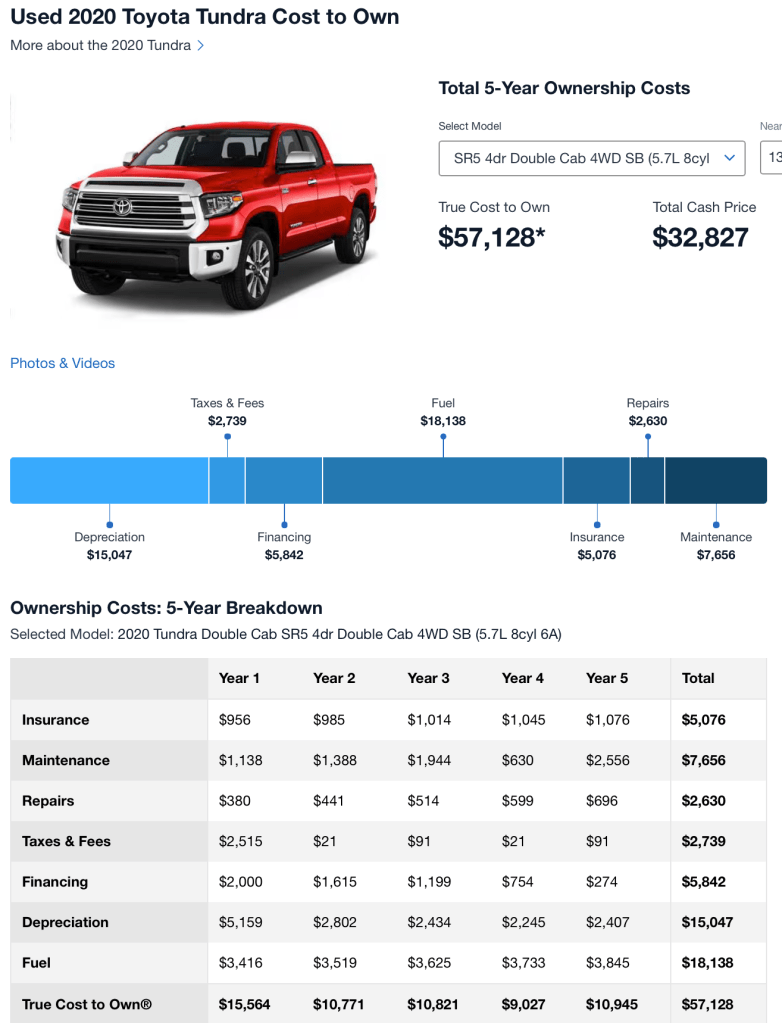
Here is a common used car, a five year old Toyota Tundra pickup, with about 75,000 miles on it.
Here is a new version of the same truck:
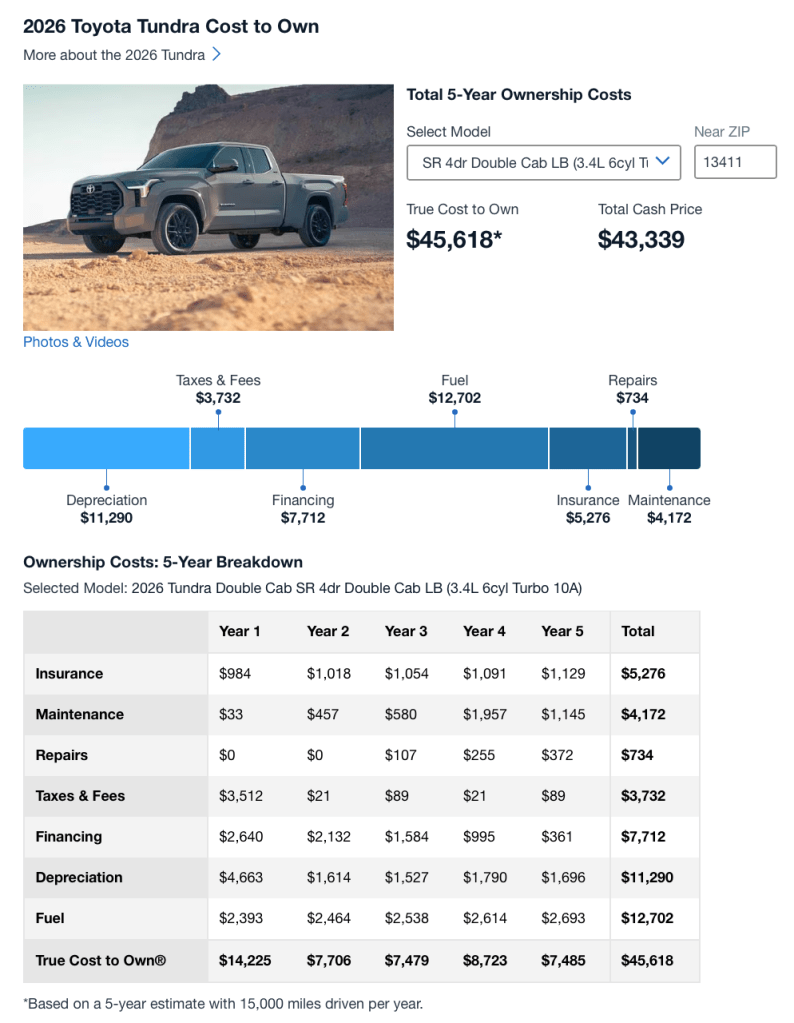
It is significantly cheaper over five years, according to Edmunds.
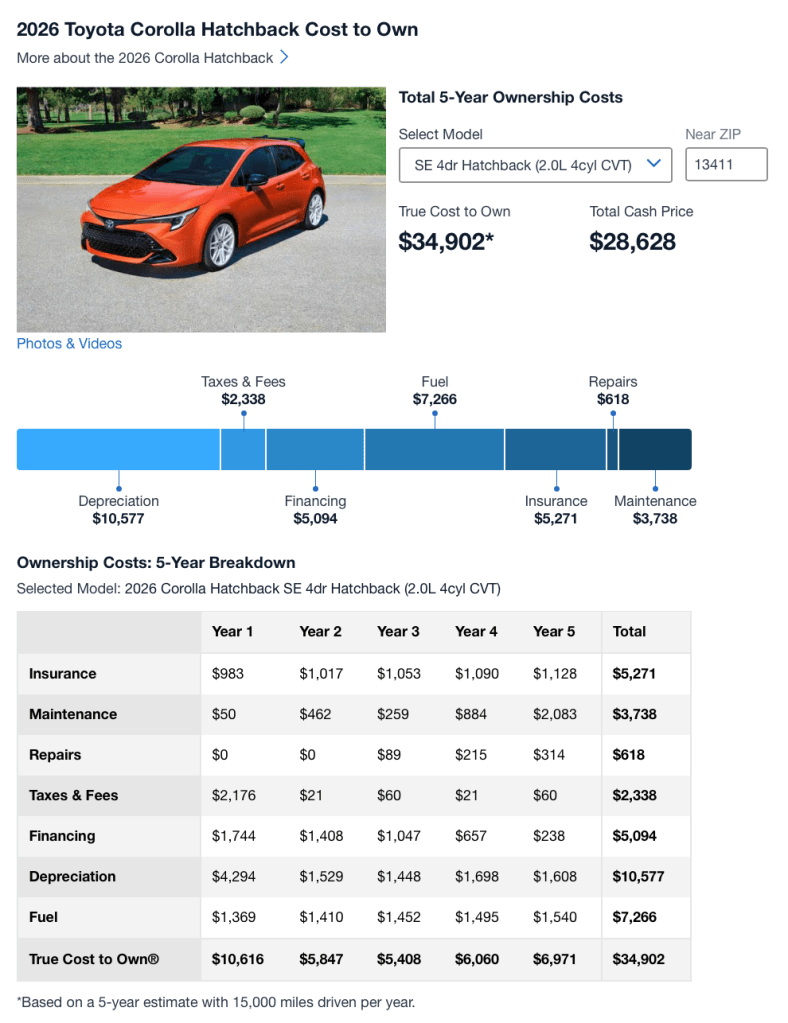
Here is a new Toyota Corolla hatch:
Here is a six-year old (90,000 miles) Corolla hatch:
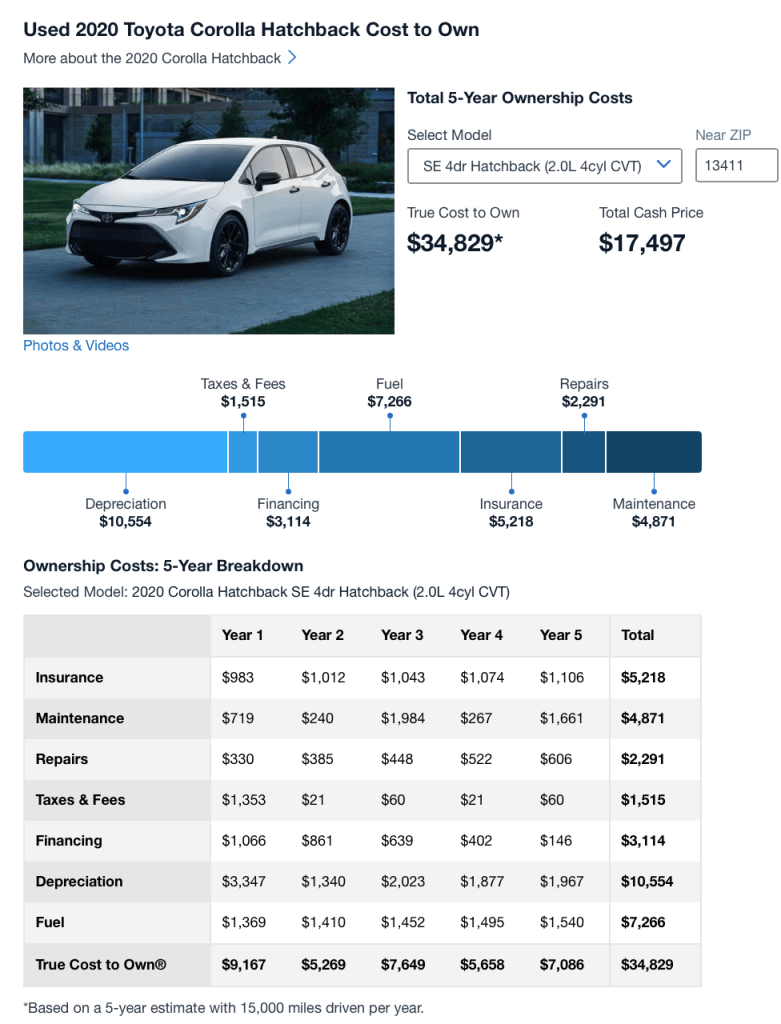
The cheap new car (Corolla Hatch) is the cheapest and best, if you can live with a cheap new car. If you need a pickup, get a cheap new pickup.

