Duties of the Young Wife #7: Getting Ready to Homeschool

One of the prime advantages of having a stay-at-home wife, or being one, is the ability to homeschool your children. You don’t need daycare, government school, or private school — all either bad or expensive options — to take care of your children while you are away at work. Not only do you save a lot of money compared to daycare/private school, but you do not have to choose your residence based on the school district. Elizabeth Warren, back when she was doing interesting research instead of being a Socialist pest, found that one of the primary ways that American families (especially two-income families) got into financial trouble was by spending way too much on a house in an attempt to get into an attractive public school district.

But today, even the “best” public school districts are little more than Marxist indoctrination centers, combined with twelve years of empty pablum where little is learned. Homeschooling is the best option, and really the only option, by which children can obtain a good education. If you send your children to government schools, and then they come back ten years later and burn your house down, well — what did you think was going to happen?

Most Moms don’t really have any idea of how to homeschool. It is not very hard, especially in the K-6 years, but it is not exactly trivial either. I would plan on spending about 3 years just studying how to homeschool, and also, familiarizing yourself with some materials of substance, which you can then offer to your children.

There is a lot of overlap among homeschooling methods, but also, people tend to segregate into one community or another. I follow the Thomas Jefferson Education method of homeschooling (tjed.org). If you want an intro, the place to go is Mentoring in the Classics, a how-to course for parents.

I also recommend AmblesideOnline.org, in the Charlotte Mason style. This has a wealth of wonderful curriculum materials, mostly from the pre-1920 period. They are really good. The difference between what people learned from in those days, and today, is vast.

The books of John Holt, and other materials in the “unschooling” style, are worthwhile. Also, read the books of John Gatto, particularly Dumbing Us Down and the Underground History of American Education.

Among the great works for children, we have:

The Little House on the Prairie series
The Little Britches series
The Anne of Green Gables series

Plus, many more, such as from this booklist.

I would just read them. They are for children, so they don’t take long. Read the first two Little House books, the first Little Britches book (Father and I Were Ranchers), and the first Anne of Green Gables book. Read Heidi, Little Women, Treasure Island, and Captains Courageous.

I would do all of this while your children are infants, or even before then. It will help establish in your mind what you are going to be doing for the next twenty years.

But, all this is mostly for children ages 5+. Later, I will talk about what to do for infants and toddlers.

Not So Many Hookups

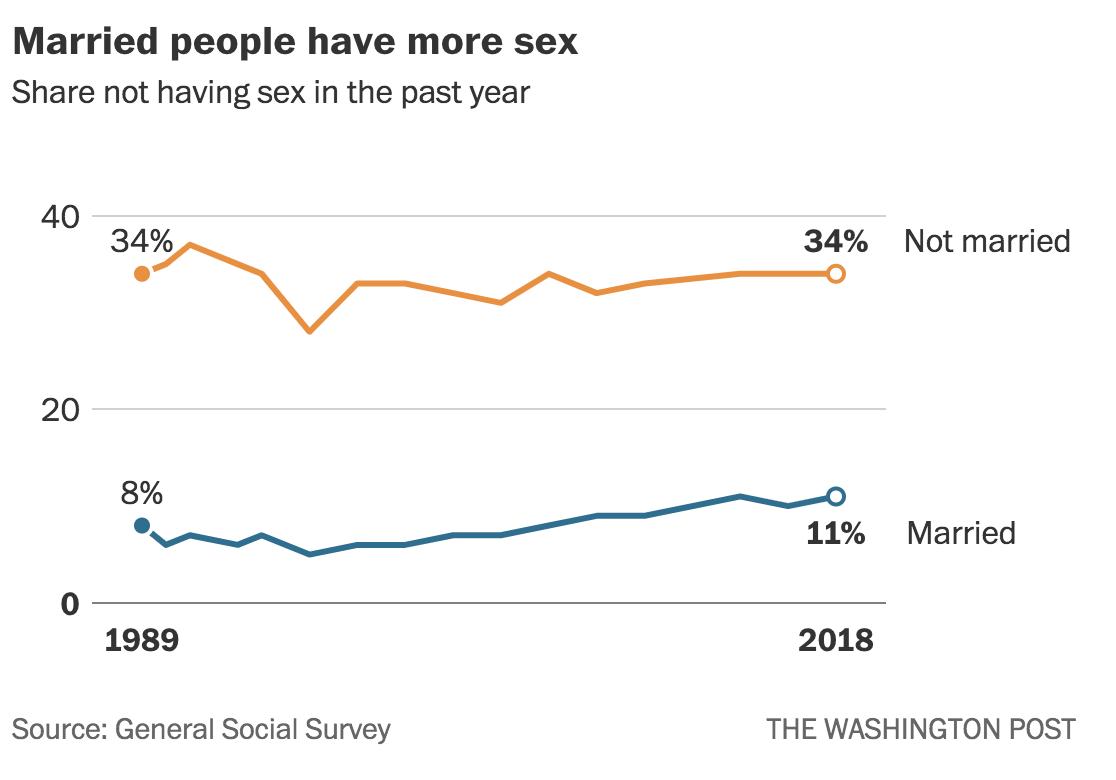
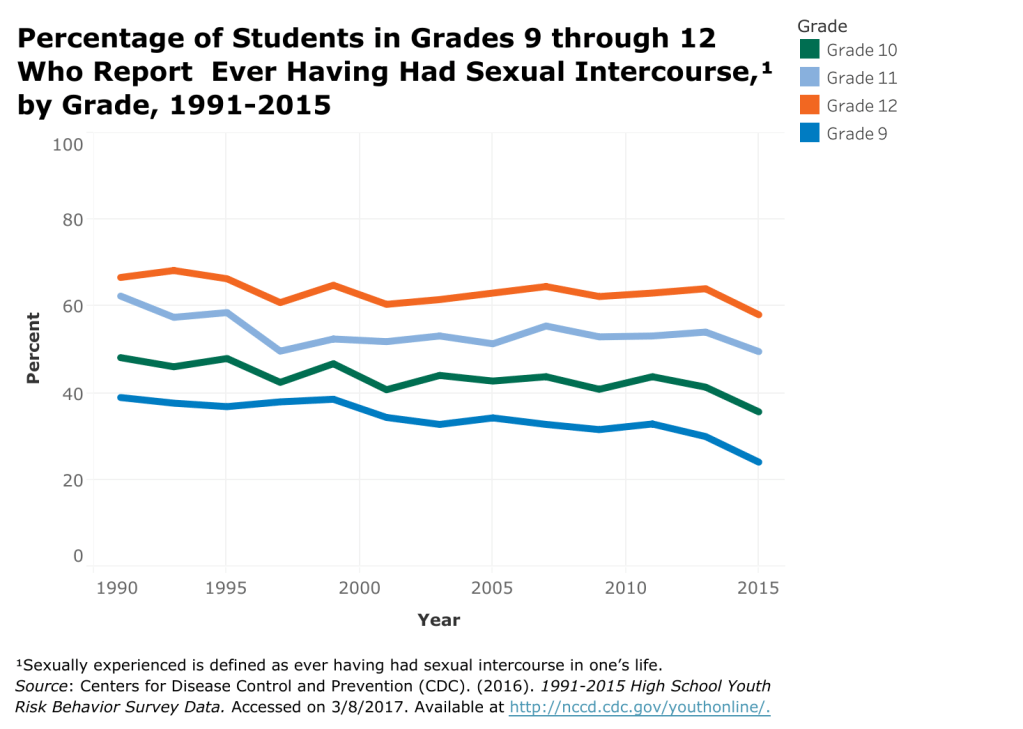
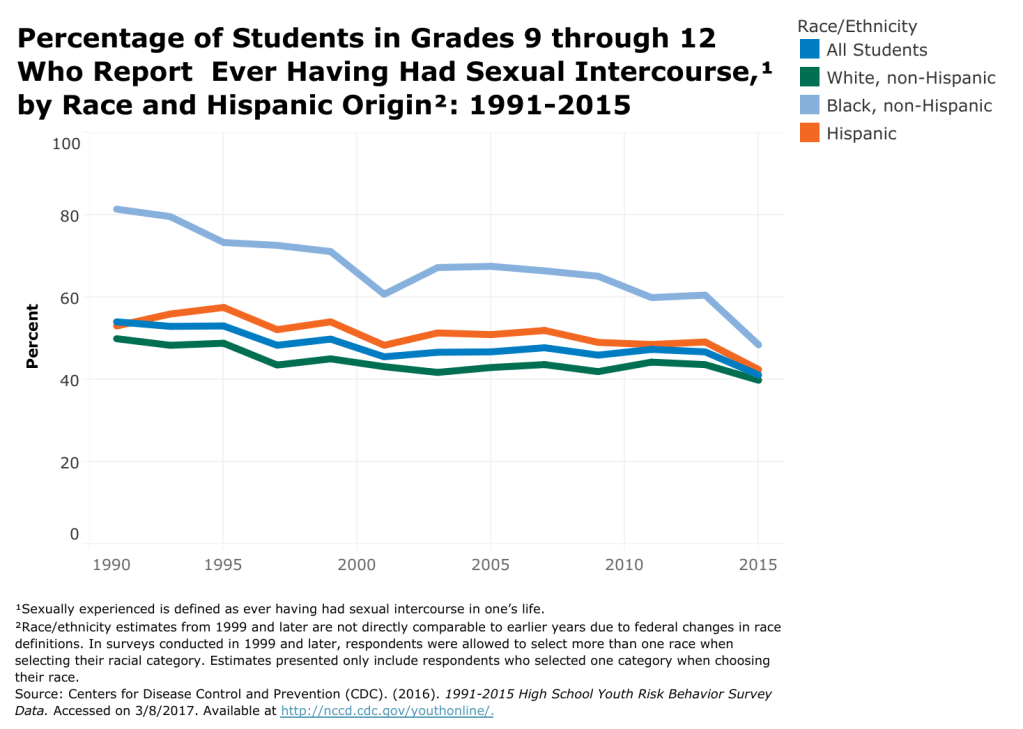
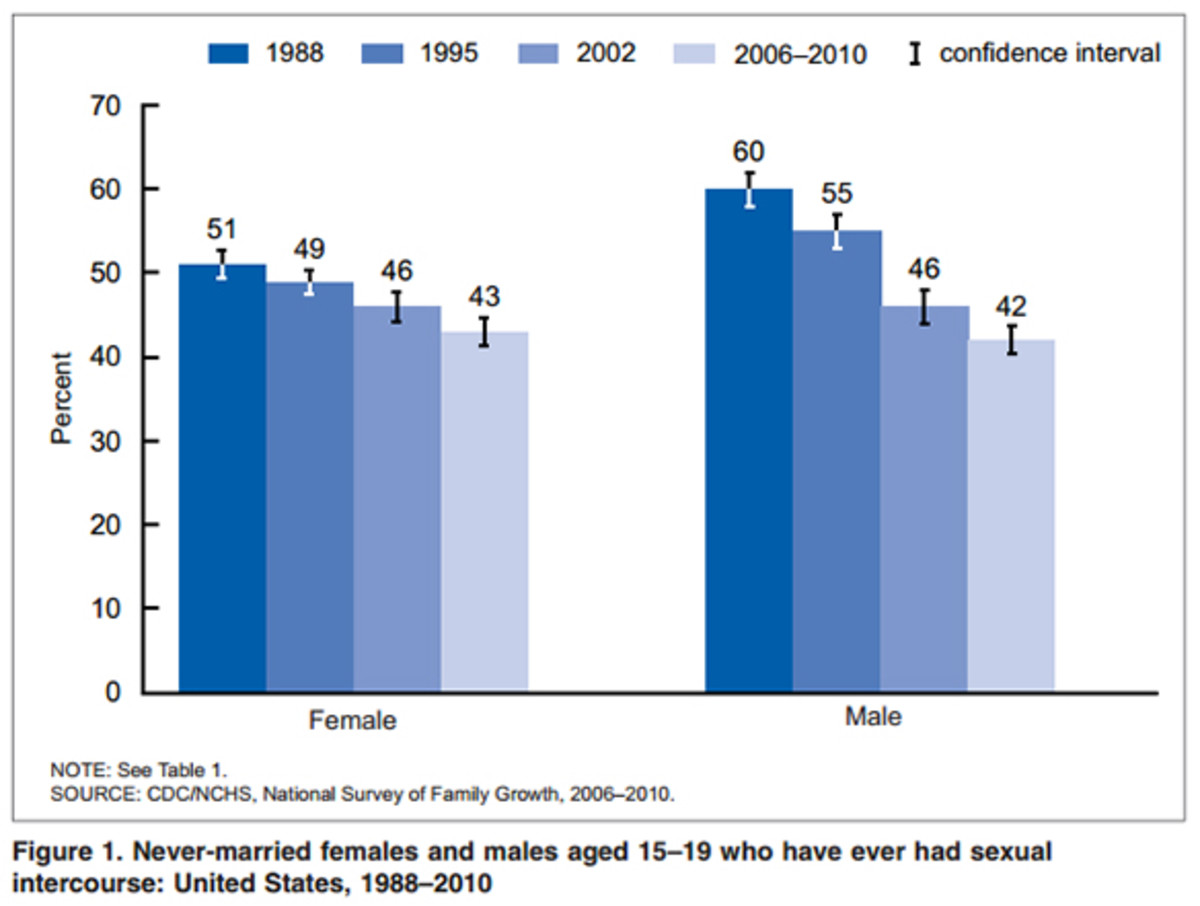
A recent survey by the Harvard Graduate School of Education found that fewer than 10% of college students reported having four or more sex partners in the last year. In a different survey, 34% of college students reported not having sex at all in the past year.

Atlantic Magazine on the “Sex Recession,” December 2018
Atlantic Magazine on the “Sex Recession” and happiness, April 2019

From this pool of dissatisfied youth, or perhaps their younger sisters, we might get more young women who are willing to skip the Decade of Dysfunctionality (18-28), and become young wives and mothers.

Advice to Virgin Men on Their Wedding Night

Since Lori Alexander did a nice item on “advice to virgins on their wedding night,” I thought I would add something.

In the past, women were expected to be virgins on their wedding night. Men were also expected to be virgins; but, if they weren’t, that was OK too, as long as they didn’t have such a history that they might be expected to cheat on their wife. In practical terms, women tend to lose their pair-bonding tendencies after only five partners, but for men, it is spread out over about thirty partners. Since not many men had so many partners, in practice men’s pair-bonding ability was not much impaired. It was OK. Men were also expected to go out in the world and make a living, and not seek a wife until they were able to support a family. Obviously, with men out on their own for years, some dalliance was to be expected. Women were expected to live at their father’s house until marriage.

Nevertheless, sometimes men are virgins on their wedding night. They might not have a woman “with experience” to show them how to do it. In any case, there’s always a first time.

In practice, what happens on the first night is not very relevant, because there will be another night after that and after that. Probably, the first time will be uncomfortable and … not exactly disappointing, but … minor. In time you will get better. This is more of a guide for the first year.

Even the most goody-two-shoes girls want you to fuck their brains out. Because, who is going to do it, if not you?

Don’t treat your wife like you would treat a mistress. You have to live together for a long time.

Do it again. It can take some time for a man to learn the control necessary to have sex for a long time. If it is over too quickly, then wait 20 minutes and do it again — even if you don’t want to. You’re young, so this won’t be difficult. The second time will last a lot longer.

Women can have multiple orgasms, and they are long. Unlike men, they are quickly ready to do it over and over and over. Also, women’s orgasms can go on and on, so don’t stop. Sometimes, it takes a while (weeks, maybe years) for a woman to learn how to do this, so work up to it and be patient. But, I think most women can learn to have 10+ orgasms in a night.

Most of the fun of sex consists of making your wife come over and over. This is very satisfying. The term “fucking her brains out” is not just a phrase: sometimes, girls lose the ability to speak for a while. It is rare, but sometimes women will pass out completely. There are some Tantric types who say that men are also capable of similar orgasmic response, with practice, but this is unusual.

Take charge. Men should be “active” and women tend to be “passive,” similar to dancing. (This “passivity” can mean more actual activity, also as in dancing, where the women do all the spins and jumps.) Especially for inexperienced women, their natural tendency is to lie quietly on their back and wait for you to have your way with her. “Taking Charge” means that you just do it, without discussing it first. But, in “taking charge,” your goal is still primarily her pleasure, so pay attention to what seems to be working.

Every girl wants to be that girl. Burt Reynolds, from the 1970s.

Try something new.
sexinfo101.com

Missionary position is the best position. It just is.

Sometimes subtlety is best. Very energetic sex is common in porn because it looks good on video. But, sometimes a more effective approach is to be somewhat subtle. Some women respond to being tickled, not jackhammered; at least, not at first. Sometimes she wants to be played like a musical instrument, not banged like a drum. You might be surprised at what a response you can get from doing almost nothing at all. Also, doing it the “usual way” but with some little subtlety of timing or movement can make all the difference.

Sometimes you should just pound her into oblivion. It depends on what her reaction is.

Here are a few tips for women on their first night:

It might hurt. Take it easy the first time. Try again later.

Just lie on your back and let him have his way with you. You don’t really have to know what to do.

But, don’t just lie there like a sack of sand. Respond erotically. Make noise. He needs to be able to tell what your internal state is, i.e., if it is working. Be creative together. Be a sex goddess, and don’t be embarrassed about it.

Relax. Don’t overthink it. Just float downstream.

Tell him what you want. Because, sometimes you really want it.

Find your orgasm. It takes practice to find out what works for you. It is more of an internal thing, a “state of mind,” than a matter of doing this or that.

Don’t worry about his pleasure. Just roll your eyes back and enjoy getting banged to heaven. Let your feminine lust flow freely.

Don’t do weird stuff. That is for messed-up, burned-out people who can’t get off the natural way.

The Younger Half

The median age of first marriage in the US, today, is higher than it has ever been.

Today, we talk about those women who squander their youth and beauty on sluttery and concubinage, and then have an “epiphany phase” around age 28 (coinciding perfectly when they perhaps realize that single women are in the minority), where they decide that maybe being a slut/concubine forever is not such a good idea. Certainly, there are millions of these women.

Nevertheless, there are also many women — half — who get married at the median age of 28, or younger. If you consider that it often takes 6-12 months from the decision to get married to actually doing it, and that we can imagine at least 6-12 months from first meeting until the decision to marry, again we find that about half of the women meet their future husband during the ages 16-25. I would say that this is the better half — those women who are, obviously, not wasting the entirety of their twenties on sluttery and concubinage, and among them, some pretty decent girls. It is hard to imagine a slutty girl who then somehow marries at age 25, unless perhaps to an unusually wealthy and stupid man, who makes an offer she can’t refuse.

I guess that nearly all the women who go on to make decent wives are in this younger-half category. Some of them take a little longer, and get married around 28-30 perhaps to a man that they have been in a monogamous relationship with for a long time, like five years. These are the women who naturally form lasting relationships; and this is what they do. Thus, they are gone: only the leftovers remain. The back half, after the median. Among these leftovers are some decent girls, including the “never had a boyfriend” girls and even some very high quality but deluded Christian girls who are waiting and waiting for God himself to deliver Prince Charming on a cloud with a host of angels. No mortal man is good enough for her; and even if she does find such a man, she waits and waits and waaaaaits for him to chase her, as if a man of that sort needs to do that.

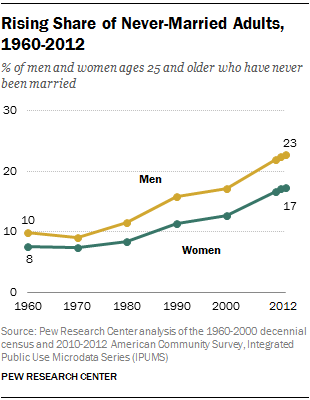
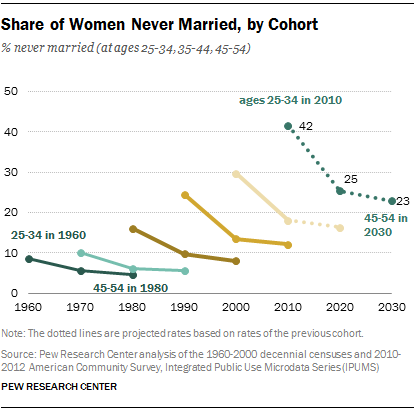
But, mostly, the good ones are gone. Increasingly, men understand this. Something happened to her between the ages of 16-28; and mostly, it was something bad. I think that we are going to see many men decide that they would rather be single than take these old and damaged leftovers. The risk and disaster of divorce, or an unhappy marriage even if one doesn’t get divorced, is too great. Mostly, these will be the men of insight and self-control — that is, the best men. Until now, nearly all women (92% of white women) eventually got married, but I suspect that, going forward, of this latter half who aren’t married by 28, perhaps half of those never will; thus, 25% unmarried, which will seem like a very big number.

This is not just my opinion, but the conclusion of the Pew Research Center:

Rising Share of Never-Married Adults, 1960-2012
Share of Women Never Married, by Cohort

Since only the good girls are likely to be reading a site like this, I interpret this to mean that good girls should endeavor to be in this earlier-than-the-median half, which is where most of the good girls already are today.

The men who are interested in marriage and family would do well also to search in this younger-half cohort.

How to Get Married Young

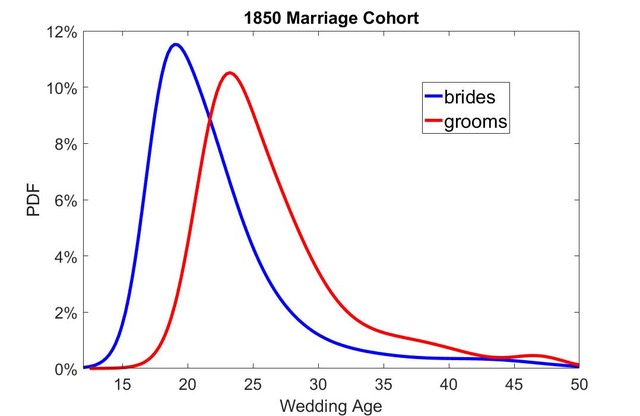
In the past, women married young. The prime window was 16-25, with the peak around 18-20.

How did this happen? There were a number of elements to it, but among them, women lived at their father’s house until marriage. They kept busy, but they didn’t have to make a living. Getting married was their prime “activity,” if you could call it that.

Mothers and Fathers wanted their girls to marry decent men; and, no dilly-dally. To achieve this end, parents themselves arranged a variety of situations where their daughters could meet the right kind of suitor. Dances, in particular, were popular. The entire family went together. Clubs of various sorts, where boys and girls could meet each other, were established by parents; perhaps, as part of the Church. On top of this, mothers especially would help set up meetings with the promising sons of the women in their matronly circles.

Along with all this, mothers taught their daughters to be attractive to a man (dress, skills, manner), while fathers taught discipline. Parents did all this work because they wanted a good outcome. Girls mostly just had to go along with the program.

Today, parents largely practice a policy of neglect. They don’t tell their daughters much of anything at all, and don’t help in any way. What little they do tell them is mostly contrary to marriage: go to a good college, get a job, don’t be distracted by a man, don’t get pregnant. Girls don’t learn much in the way of skills, and are mostly told that they can enjoy freedom without responsibility.

In short, parents are hideously negligent. This includes upper-middle-class parents, who, in many cases, make all the same mistakes with special enthusiasm and effort.

Along with all this, women knew that, if they wanted to marry a Top 20% man, they had to out-compete 80% of the women; and, 80% of the women weren’t going to be successful. As Dalrock has observed, in the past, women were quite active in seeking a partner and gaining his attention. Today, they mostly put all their chips on random luck, while they are busy doing other things.

These patterns, perfectly sensible if a woman wanted to actually get married, are nearly the perfect opposite of the way women behave today. Women seem to think that marriage will just happen, if they make no effort at all. They also seem to think that they are entitled to a Top 20% man, but need make no effort to achieve this besides actually having a vagina, nor have any attractive qualities, even the most rudimentary virtues such as not being grossly fat. Thus, they reject any man perceived as not among that Top 20% (even though he might actually be in the Top 20% for marriage), perhaps threatening to have him arrested for “sexual harassment” along the way.

Thus, women today become experts at waiting. Waiting and waiting and waiting. If waiting worked, they wouldn’t be waiting so long.

This puts our young woman in a challenging position. She has no help from parents, or other social institutions, or the observable norms of society. Even work and school, which was recently the place where about 40% of people met their spouse, is now increasingly off-limits. Men won’t even get in the same elevator as you, for fear of losing their jobs as a result. It is common for men to avoid all eye contact with women at work. This is not because they are excessively timid, but because they simply have worked out the risk/reward ratio and have adjusted accordingly. Do not interact with these toxic bitches any more than you have to. (As if to prove their toxicity for all to see, women then complain that men are avoiding them! Guess what girls: men aren’t interested in women, or any people really, that do nothing but spew complaints and demands. Someday, let me explain what the phrase “a firehose of shit” means.)

Men today have, with great effort, trained themselves not to engage with women in day-to-day activities. Mostly, they won’t approach you. This kind of hard discipline worn into habit cannot be easily turned off and on. Theoretically, men would be more willing to interact with women, if there was some kind of situation where it was established beforehand that women want to be approached. Today, this mostly means bars and clubs. But, this is almost entirely hookup-related today, and many men, who are not interested in this — in other words, the kind of man who is interested in a more serious relationship — will simply not be there.

I conclude that women will have to make a special effort today to indicate to men that they will not be sent to court on sexual assault charges, if men break their policy of non-interaction. The first reaction, for a lot of men, if a woman interacts with them, is not “Oh, this is pleasant!” but: “Am I stepping into a pile of shit here?”

This is difficult for many women. They find it very difficult to be proactive. Here is one woman — a very nice woman! — who concluded that the Bumble app was unusable because it required women to “make the first move.” Women can’t even do this in the most indirect possible fashion, a text message.

If women want to go on a date, increasingly I think they will have to ask a man to go on a date. If she wants to, a woman can do 90% of the asking, basically telling a man that he is pre-approved:

She: “Let’s do something together sometime.”
He: “What, you mean like a date?”
She: “Well, that might work. What do you think?”
He: “Dating is kind of a shitshow these days.”
She: “Well, maybe it wouldn’t be a shitshow if we did it.”
He: “OK, well, my friends tell me that you shouldn’t waste any cash on a bitch unless you have screened her first. I’m not going to be a Foodie Call. So would you like to get some coffee?”
She: “OK, that would be a good start.”

This “date” should be, explicitly, part of a marriage strategy. Don’t ask a man on a date who you are not prepared to potentially marry — who has known, pre-existing disqualifiers. Otherwise, you are just wasting your time, and he is just wasting his time, unless there is some sex involved. Now you are having sex with a man who you have already pre-determined that you will definitely not marry — burning up time and accumulating damage.

Not the most romantic thing, I admit. But what are you going to do? Wait?

All Or Nothing

While we like to talk about the abject sluttery of many young women today, and also those that aren’t really “that kind of girl” but end up going pretty far down that road during the process of “dating,” I think that there has also been a tendency for many young women, and men, to pull back and reconsider. We see the “middle of the distribution” hollowing out, replaced by a barbell distribution — too much, or too little.

For example, the “never been kissed” and “never been asked on a date” theme also seems strong among Millennials and Gen Z. These girls are not celibates in theory, only in practice.

For example, we find, in “College Virgins are a Silent Almost-Majority”:

These days, Nicole is thinking a lot about sex. Not the sex she’s having but the sex she isn’t. The sex she feels like she probably should have had already. The sex that got away. This past summer, sitting at her kitchen table, still in the clothes she’d worn that day to her internship, she got the call she’d been expecting, and sort of dreading, for a while now. “I have something to tell you,” her best friend from home exclaimed over the line. “I had sex!”

Nicole brimmed with questions: “How was it? How big was his penis? How many times did you do it?” She was thrilled for her friend but also unsettled. The two of them had grown up together in Orlando, sharing so many of the same life experiences that their childhoods seemed to meld into one. Then, a few months back, her friend had met a guy she liked, had started dating him, had fallen in love — all milestones that Nicole, now a senior at NYU, still awaited. While her friend had once been proof to her that you could be a 21-year-old virgin and still be cool, now Nicole felt left behind. “I get off the phone and I feel like I’ve lost a friend. I was like, ‘The club is dwindling.’ ”

They must be very principled.

But they both have also subscribed to the notion that their first time should be special — not necessarily with a boyfriend or someone who loves them but at least with someone they care about on some level, someone who will consider their pleasure at least as much as his own.

This, apparently, is how a semi-attractive senior at New York University, in the center of Sodom-on-the-Hudson, becomes an accidental celibate. The article says that 20% of all college students are virgins on graduation, and around 40% of all students are virgins.

Nicole’s friend and roomate Rachel, also 21, is not so picky. Rachel is definitely on the “college boyfriend” track. She just wants to get her V-card punched so she can start partying.

Rachel says she doesn’t have a problem with hookup culture; she and her friends expect random hookups to be the entrée into something more serious, even though they also expect that most hookups won’t end that way. (“It’s a game now, like you have to be the person who cares less. If you start hooking up with a guy and don’t care if he likes you, then you start dating.”) But she also feels caught in a bind: All throughout high school, she held out, stopping sexual encounters just short of intercourse, with the idea that sex in college would be better, more mature and evolved. .

Unlike Nicole, who longs for a boyfriend, Rachel wishes she were able to participate in hookup culture. “I feel like once you’ve had sex the first time, the wall breaks and it’s acceptable to have sex with more random people,” she says. “I wish I could explore all of that, but I feel like the first time has to be a certain way. If I could get that out of the way, then if I had sex another time and it was bad, I wouldn’t be like, ‘That was horrible, bad on me, wrong move.’ I would be okay. But if that was the first time, I would be like, My life sucks.”

This really is a low hurdle. You figure she could stumble over it drunk. Especially at New York University. Nevertheless: nothing.

Not that I am criticising Nicole. I have been saying that we should adopt the old principle of marrying before having sex. Normally, this means marrying young, and having a lot of sex. At age 21, a lot of married “good girls” were getting pounded four nights a week.

Christopher Ingraham on Twitter: "Final datapoint: the share of young men  reporting no female sex partners since they turned 18 -- a rough a proxy  for virginity -- more than tripled since

Recently, we have seen the deterioration of “dating,” as it existed (briefly, and transiently) in the 1920-1970 period. As “dating” disintegrates, it is replaced by “hookups” or … nothing. A lot of attention has been placed on “hookups,” but for a lot of people, they have nothing. This is largely by choice — women, and men also, could participate in hookups if they wanted to, but they don’t want to.

Demographics of inceldom - Incel Wiki

Over Half of Today's Teenagers Are Virgins - Pacific Standard
Percent of college students that are virgins, by major (pic) : pics

Wellesley is, of course, an all-women college.

Here’s another:

Now, I know that there are a lot of girls who have “never had a boyfriend” because they are party sluts, or because they have been in side-chick rotation.

But, setting those aside, there are a fair number of women who just haven’t had anything at all. Admittedly, many are Fugly, or, maybe “invisible” 5-6s. Still…

Then there is a small group of self-described “femcels,” who seem to think that, because they are getting almost no attention, they must be horribly ugly. Actually, they are 5/6/7s, nothing special but above average. (When 40% are obese or overweight, average not-fat girls end up above average, by default.)

I think this is somewhat hopeful, because it shows that a large number of young people today are not really lost in hedonism. If you could make them a deal: “get married young, to the best guys (because the smart ones want young debt-free virgins without tattoos), skip college, career, debt, and a decade of self-destructive ‘dating,’ have children and a family, and stay at home,” a lot of young women would take it.

Cane Caldo on the “Purity Movement”

The now-dormant Cane Caldo recalls the “Purity Movement” among many Christians. It seems to have been very effective at keeping highly eligible young men and women from marrying each other.

In general, women are the ones delaying marriage, but they’re getting an awful lot of help from their fathers. From the secular view, this primarily takes the form of daddy really pushing college[1] and telling his daughters that you never know if a man is going to stick around or not; they must be able to fend for themselves. Secondly, these days even fathers are telling their daughters to “play the field” before the settle down. “Settle down”…what an ugly way to frame it.

More traditionally-minded Christians practice this same marriage aversion, but add to it the nonsense that their daughters are spiritual princesses. A decade or so ago the keeping-up-with-the-churchy-Jones’ Christian fathers started dating and marrying them. That is…so weird and wrong.

For the moment I’ll ignore the extreme connotations, but, why in the world teach casual, bloodless, dating? That’s crazy, and unfair to both her and her date. They both have sexual energies burning holes in their pockets, and Dad’s modeling for them to bury those talents in the ground when he ought to be encouraging them to invest them. The only explanation is that the sort of Dad who would date his daughter doesn’t actually see sex as the gift and responsibility that it is. …

That gift and responsibility was given to the actual owner of the vagina; not Dad. It belongs to her until she marries; at which point she trades it fair-and-square for a dick.[2] What he should be doing is encouraging and directing her to make the trade with someone worthwhile; both physically and spiritually. Extended, platonic dating during her prime years is not the way to do that.

At the same time these fathers are acting out strange perversions of the modern courtship model, they are disparaging all the young men in their churches. They don’t have a degree. They don’t have a good enough job. They don’t have “godly enough” parents. They don’t have “a heart for Jesus”. It’s all bullshit. While Christian women are taught that Jesus is their personal boyfriend, Christian men are taught that they are the guardians of Jesus’ personal girlfriends; to let one of them be touched by a mortal is anathema. I was a 6’4″ 225lbs two-sport athlete; at church every day but Friday and Saturday; president of the youth council and the youth choir; son of a minister; personally led people to the Lord; had preached a sermon…and I still wasn’t good enough.

The situation is this: We’ve got women who are allowed to walk around in disrobed states, but discouraged from showing specific interest. Men who aren’t allowed to look (because women are half-naked), but are somehow supposed to differentiate and pursue their One True Love who ignores them. The fathers won’t allow their daughters to engage anyone who isn’t the equivalent of an established 35-year old, but in an age-appropriate body. And everybody is convinced that sex is the greatest thing ever and also a naughty thing–all at the same time. These things (among others) exacerbate, and even encourage, the problem of women delaying marriage.

Divorce in the Nineteenth Century

When we think about divorce, we usually have the idea of Before and After no-fault divorce, which began around 1969. This led to a huge rise in divorce.

This is the “crude divorce rate,” which is a simple ratio between the number of marriages and divorces in a given year. It is about 50%. But, it is close to the “longitudinal divorce rate,” which is the number of marriages at a given time (today, let’s say) that will fail eventually.

We usually have fond feelings for the 1950s, as a time when marriage was strong and family values prevailed. Nevertheless, the divorce rate then was about 25%, and unmarried teen pregnancy (the result of the mass embrace of “dating”) was a major problem.

Here is how it looks in the longer term:

The Marriage Rate was pretty stable throughout, until a dropoff beginning around 1990. This was mostly a matter of delaying marriage, since even then, around 92% of all White men and women got married eventually. The decline in divorce since 1990 has largely been a function of fewer marriages, leaving the crude divorce rate unchanged around 50%.

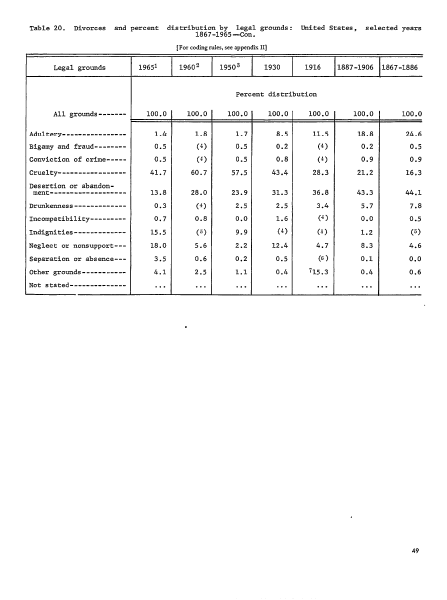
But, we see a long rise in divorce from 1870 to a plateau in the 1950s and 1960s. Here are some detailed statistics on divorce in the 1860-1940 period.

Here we see, for example, that in the 1870s, there were about 9.0 marriages per 1000 people; and about 0.3 divorces, for a “crude divorce rate” of 3.33%. By 1900, the “First Sexual Revolution” was already beginning, and divorces had become more common. But even then, in the 1900-1910 decade, there were about 10 marriages per 1000 people; and 0.8 divorces, for a crude divorce rate of 8%.

In other words, a healthy Christian society that practices Courtship, and has fairly strict restrictions on divorce, might have a divorce rate around 5%. Which is a lot lower than 50%, or 25%.

Among other things, this would tend to make even “successful” marriages more placid, since the threat or possibility of divorce is far more remote. Men and women would have to get along.

In short, it is a proposition that men could accept. They would have a pretty good chance, at least, of not getting blown up in divorce court. They would keep their children. They may end up sleeping in separate bedrooms from their wives; but, so what. In those days, women were wives, or prostitutes. Prostitutes, at least, did not pose a threat to the family. A man does not get divorced for a prostitute.

Then as now, women were the primary instigators of divorce. Although divorce was rarer, it was, nevertheless, possible. The typical legal structure was that a divorce required either mutual consent, or provable evidence of adultery or cruelty of some substantial degree.

The primary reasons for divorce were adultery, cruelty and abandonment. But, in those days, these accusations had to be proved. There had to be “fault.” Abandonment was probably the practical solution to a lot of irreconcilable marriages. Either the man or the woman just upped and left, leaving the legal status to be resolved at some later date. But, remember that only about 5% of marriages ended up in one of these categories.

The First Sexual Revolution

The “sexual revolution” beginning in the 1960s was actually considered, at the time, the “Second Sexual Revolution.” This is to distinguish from the “First Sexual Revolution,” which began in the 1890s and encompassed the 1920s. This was the adoption of “dating,” (basically, premarital sex) instead of Courtship. It also had a corresponding contraceptive technology, which was the cheap, mass-produced latex condom, which become common in the 1920s. It had its own music, Jazz, instead of Rock.

Here, from 1935, is a little better quality film, also of Josephine Baker, expressing the changes happening around that time.

It coincided with a movement of single women from their father’s house on the farm to single working life in the cities; and also, First Wave Feminism, expressed by the Nineteenth Amendment giving women the right to vote. This was first introduced in 1878, and passed in 1919.

Before women became single working girls, there was not much point in having women vote. Women were either part of their father’s household, or their husbands, and their fathers and husbands voted for their whole household, presumably including the views of the wife.

Sexual Revolutions | Frontier to Heartland: Four Centuries ...

Despite this, many people continued to engage in Courtship, just as many people continued to engage in monogamous Dating after 1970.

The themes of stories like “Big Blonde,” by Dorothy Parker (1929), would be familiar to Red Pill types today — girls who, instead of marrying young and starting a family, instead party their way through their 20s.

Hazel Morse is a big blonde. Like the other big blondes in her company, her life is an unremarkable stream of parties and men. Accepting unquestioningly that popularity is important, she strives to endear herself to many men. Hazel builds her external identity around an image—that of the good sport. At first it is easy, but gradually it becomes a matter of practice, for her to be cheerful and bubbly, carefree and gay. She begins to tire of the game and decides to marry, believing that this will enable her to discard the facade she had so carefully constructed. She soon learns, however, that the Hazel she presented at parties is the Hazel her husband wants her to be. When she ceases to be that Hazel, her husband grows disenchanted and leaves. Alone and without financial support, she falls into relationships with a variety of men, each expecting the jolly, compliant Hazel in exchange for their patronage.

Hazel cannot escape the consequences of the life she has chosen, nor can she escape recognizing the mistakes upon which those consequences are built. Her understanding of her circumstances is at first subverted by her own confusion: “Her days were a blurred and flickering sequence, an imperfect film, dealing with the actions of strangers. . . . She never pondered if she might be better occupied doing something else.” She falls deeper into the trap of posturings and pretensions, but certain realities nevertheless grow harder to deny; she wearies of always being accommodating and cheerful and begins to dwell on the things she must say and do to maintain her appeal. She hurries to banish these worries with alcohol. After a while, even the alcohol cannot blur the face of truth; she begins “to feel toward alcohol a little puzzled distrust, as toward an old friend who has refused a simple favor.” Hazel turns to suicide. When she is unsuccessful at permanently blotting out her painful existence, and can no longer retreat into a blissful alcoholic stupor, she realizes that truth is immutable and is compelled to face the dismal future wrought by her own hands.

In the story, her husband leaves her, but today she would leave him.

But, this period was stifled by the Great Depression and World War II, which drove people toward more risk-adverse behaviors.

This “first sexual revolution” was, in most ways, more significant than that of the 1960s, which merely picked up the same themes after people had recovered from the hardships of WWII. One point of this is, dysfunction — it is more-or-less the same dysfunction — has been with us a long time. We have to reach back before 1900 to find stable, productive systems.