Sigma Frame has had a nice series on birth control, including hormonal birth control. Our principle is: male birth control only, which basically means: condoms.
https://sigmaframe.wordpress.com/abortion-and-birth-control/
Sigma Frame has had a nice series on birth control, including hormonal birth control. Our principle is: male birth control only, which basically means: condoms.
https://sigmaframe.wordpress.com/abortion-and-birth-control/
If the Good Wife Level 3 is ambitious and conventional, the Good Wife Level 4 is ambitious and unconventional. Her ambitions take her beyond the mainstream norms, which she finds only an exercise in mediocrity, or even quite sinister and destructive. Thus, she becomes something of an oddball; an experimenter; an explorer; and many people do not approve, or even understand what she is doing. This, she finds, is very exciting. Here we must venture a little into fantasy, for hardly any real-world woman could excel at so many things as we will list here. Probably there are a few things that a real-life woman does at a Level 4 standard, and other things she does at Level 3 or Level 2, or Level 1. But, simply by making a list, we will perhaps inspire some women to become Level 4 in more aspects of their lives.
Where the Good Wife Level 3 is basically a herd-follower, the Good Wife Level 4 sees where the herd is going, doesn’t like it much, and goes her own way. This requires research and learning. The Good Wife Level 3 makes sure her children get all their vaccinations; the Good Wife Level 4 wonders if vaccination is a good idea at all, and begins to research the topic to her satisfaction. The Good Wife Level 3 exhorts her children to “excel” at the local public or private school. The Good Wife Level 4 thinks that these schools are not teaching her children what she wants them to learn, and looks for alternatives. This could be moving from public to a private school, perhaps a private school with a certain distinctive education philosophy — Waldorf or Montessori, for example, or a Catholic school or a boys-only school. It might mean adding a program of education at home, on top of what children are learning in school. It might mean dropping schools altogether and becoming a homeschooler.
The Good Wife Level 4 certainly refuses the Standard American Diet of junk food, but also thinks the Traditional American Diet is perhaps not so good, or anyway, need not serve as her guide and ideal. She looks into a Whole Foods Plant-Based diet, or perhaps a “paleo” or high-protein diet, or a raw food or raw vegan diet, and could talk about these for many hours if you allowed her to. Or, she might go a completely different direction, and perhaps spend six months mastering the cuisine of India or Thailand. If all this takes too much time, she might experiment with ways of creating healthy, wholesome and delicious food in very little time, or for very little expense, and spend months exploring all the variations of beans, rice and potatoes. She may spend months exploring the outer limits of fresh-pressed olive oil and parmesan cheese.
Her home is well decorated, but not in a conventional way. It does not look like the pages of Martha Stewart Living or the Pottery Barn catalog. It might be very eclectic, a somewhat disorganized jumble of individually-appealing pieces. Or it might have matching themes per room, for example a Persian room, an Art Deco room and an 1890s room. She is probably interested in vintage and antique furniture, as this presents a combination of interesting styles that are no longer contemporary, excellent workmanship and great values. All kinds of home furnishings can attract her interest and attention, such as dishware, towels, bedding, lighting, rugs and kitchenware; and each presents a whole new sphere of creative exploration. Decoration can easily extend to art, whether objects or pictures and paintings hung on walls. Here, she is interested in their artistic value, not just their value as decoration. She may begin to make fine art or artisanal works herself, such as photography, pottery, lamp shades or rugs.
Raising children is one of her chief concerns, and here she does not feel constrained by convention or the pattern of her own upbringing. She doubtless spends much time researching the topic, and, if you asked her, could probably say why breastfeeding is important to create an emotional bond between the parent and child; and that infants can actually become sick and even die if they are left in their cribs without physical contact, even if all their bodily needs are met. Moral education is a prime concern; but, what morals? This might be combined with introduction to a religious community and a religious tradition, or may be done independently.
The Level 4 woman is likely drawn to homeschooling, as she finds government schools to be intolerably mediocre if not rather sinister. Private schools are better, but her ambitions may extend well beyond what these can offer, and also, their expense may extend well beyond her budget. Homeschooling is a vast topic, with some methods that follow conventional norms and other methods that embark on wild experiments.
While the Level 3 woman floats happily on a river of mainstream media, the Level 4 woman probably finds the popular media, music and entertainment to be rather degenerate or even sinister, at best a waste of time and at worst a sewer pipe of Cultural Marxist brainwashing, and cuts it out completely. The Level 4 woman may eliminate “screen time” from her children’s lives altogether. Or, if not, she carefully curates what they are exposed to.
The Level 4 woman recognizes that physical exercise is sadly lacking in most people’s day-to-day lives, and may become very enthusiastic about working out, triathlon, running, dance, or some other form of physical activity. Combined with her interest in healthy food, the result is that she is in great physical shape, to the delight of her husband.

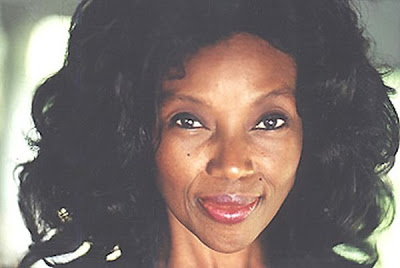

Naturally, if you have body like Annette Larkins, the Level 4 Wife becomes interested in dressing well; and this does not mean merely conforming to today’s norms in a pleasing manner, but the whole spectrum of potential regarding a woman’s dress (and that of her children as well). She might experiment with vintage fashions. She might decide that, as an experiment in traditional femininity, she will wear only dresses and skirts from here henceforth; and all of these must be below the knee. She naturally upholds a minimum dress code for her children; and you will never find her girls in tights alone or boys in dirty t-shirts.
The Level 4 woman may explore a variety of themes: she may become an extreme couponer, purchasing $400 of products for $15. She may experiment with living in a very small space: can a family of five live in a 600sf one-bedroom apartment? Or, in an RV, or a sailboat? She might try to live without producing trash, or experiment with radically reducing the family’s number of possessions. She may look into ways of living well while spending very little money; her husband might like that.
Her husband need do little but stand back and let her have her fun, as he and the children are the beneficiaries of all this enthusiasm, as long as it fits within his overall plan for the family. He regulates how much his wife can spend on her enthusiasms. If she thinks it would be worthwhile to spend more, she must convince him of its merits, and he must be convinced. Although the Good Wife Level 4 is having a great time with all of this, nevertheless all of it is in service to, and to the benefit of, her husband and family. She can have her own time too, but never do her own enthusiasms come at the expense of her responsibilities, or to the well-being of the family as a whole. At no time does she attempt to wrest control from the husband, against his wishes. But, normally the husband does not need much convincing, and his approval and support is nearly certain. The husband may guide her, serving as the 1% of inspiration that leads to the 99% of perspiration: “Honey, maybe we should improve our home decorating/eat a more healthy diet/improve the childrens’ education.” In short, all of her projects become his too, because he has approved of them, even if she does 95%+ of the work. Consequently, he has a responsibility to participate as is necessary, in a homeschooling program for example, and learn new skills or make the additional effort as appropriate. If these burdens are too much for him, then the couple needs to find a new solution. At no time does he become beholden to his wife’s schemes, against his consent and active support. Sometimes, he might have to put limits on his wife’s activity, or redirect it, as he perceives that it is causing problems or expending more resources than is appropriate. As with the Good Wife of any Level, she participates in the decision-making process, but is never quarrelsome or contentious, and follows the final authority of her husband.
All of our Good Wives are, of course, Good — that is, they create positive value, while creating a minimum of contention and difficulty, and other problems for her husband and family. But, if such Good behavior is often a matter of tradition, instinct and good upbringing in some women, the Good Wife Level 4 approaches it as she approaches other challenges in her life, as something to be studied and applied in a conscious and diligent fashion. Thus, she has the dedication to Good behavior that comes, in many cases, from doing it the wrong way first, and then mending her ways, often with diligent effort and careful study. Just as the shrewish Katherine eventually becomes a far better wife than the gentle Bianca, her sister (in Shakespeare’s The Taming of the Shrew), who doesn’t need to change and therefore never improves, the Level 4 wife’s Good Wifery comes from conscious application of principle and deep understanding. She probably has a list of favorite books and other resources on the topic, and also, some insightful and pointed criticism of some others who hold themselves out to be experts on the topic, but do not meet her high standards.
Being a Level 4 Wife can be a ton of fun, and engage the ablest women. The question of the children’s education alone is a vast topic worthy of many years of research, especially for a homeschooler. Best of all, she has the freedom to guide her activity as she pleases, for the good of the household. She finds her household duties to be a realm of near-limitless complexity and interest, and a realm where careful, deliberate action can lead to direct, real-world advantages in the daily life of the whole family. Other men’s families are overweight, unhealthy, flabby, live in a mediocre home environment where the children have a mediocre education and upbringing, and spend all their time watching television and playing video games. Her family enjoys fine food, good health, exercises regularly, looks great, dresses well, enjoys a beautiful home environment, gets a superlative education and in general spends their time in a high-value way.
It is unfortunate that many mothers feel that they need to work, basically due to perceived financial needs. Some women are just cut out to be career girls; so be it. But, the idea that being a drudge for a corporate boss every day for the glory — not of a woman’s own husband and family, her own children, community and nation — but increased earnings per share, strikes her as piteous. Too many women — she thinks — are so lost in delusion that they actually believe that being a childless, unmarried corporate workerbee is some kind of superior accomplishment. Too bad for them. Let some other man do that job. It will be no less tiresome and difficult, but it will serve as the foundational support for another woman’s family; another woman who could be having as much fun as she is.
The Good Wife Level 3 is highly able and ambitious, although again in a somewhat conventional way. You can often find this sort of woman in affluent, higher-income neighborhoods. Unlike many of those women, however, she is also Good — she does not cancel out her now-impressive list of virtues by an ever-growing list of destructive negative habits.
Since we are talking primarily about full-time mothers, of perhaps three children, her “ambition” is channeled largely to domestic pursuits. If she also works, then she probably has a demanding and well-paid job like her husband; but, on top of this, she also is ambitious about domestic concerns as well. This kind of woman is brimming with energy, and if she does not work a regular “job,” then she often has additional engagements on top of her childcare duties. This might include some kind of community involvement, or a home-based business of some sort.
Her house is not only clean and pleasant, but impressive. This takes work; and she does not stint in the effort involved in all these things. Much thought goes into the selection of curtains, or the color of the paint in the bathroom. Many hours are spent gazing at furniture or rugs, to find items that will complete her decor to her high standards.
Although her husband probably makes an income well above average, the Good Wife Level 3 is still frugal, and makes sure that her ambitions fit within the constraints of the family’s budget. Paint does not cost much, and excellent used furniture can be found for little more than the cost of one month’s cellphone bill. High-quality designer clothing can often be found used for about 10% of its original price, and it is barely worn. She leaves big-ticket expenses to her husband’s discretion, and since he has plenty of money left over and loves to please his wife, her requests are often granted.
She has high ambitions for her children, and expects them to go to top colleges. Getting into a good K-12 school district, or using private schools, is a major focus. However, her education ambitions often stop there — besides insisting that her children excel at whatever tasks these institutions present, she does not have many notions of “education” herself. She probably has little opinion of whether the education actually being received by her children at these institutions is actually any good. It is good enough that they have a good reputation. She probably does not give her children much education on top of their formal schooling, although there is inevitably a long list of after-school activities, and she does not shy at the huge amounts of time involved in making sure that her children are constantly engaged.
Nevertheless, the children have a somewhat mainstream upbringing, including immersion in the mainstream Hollywood media, newspapers, magazines, movies, music and so forth. This is considered “healthy.” She wouldn’t want her children to be “weird.” Thus, our Level 3 woman remains essentially a herd-follower. Her ideals are everyone’s ideals; but she pursues them more ambitiously. She may or may not be involved in a church; but either way, this does not produce a notable deviation from mainstream norms.
She is concerned about the poor state of the Standard American Diet, and actively avoids processed and junk foods. Her children are not permitted to drink soda, she never buys Doritos at the supermarket, and she packs sandwiches for a car trip so that they won’t have to stop at a fast-food joint. She puts a lot of time into producing home-cooked meals, and her cooking is excellent. It is, however, somewhat conventional — the Traditional American Diet of “big meat in the middle” dishes, baked goods and so forth. Nevertheless, her children get plenty of exercise and eat better food than most, and they are physically attractive while they are under her care. Her husband soon discovers that there is better food at home than at most any restaurant, and little is spent on “eating out.”
She actively takes on new duties and projects, but does not burden others, especially her husband, with her ambitions. Her husband is probably quite busy, and barely has time to play with the children and mow the lawn before heading back to work. There is no nagging or “honey-do” lists. Rather, she takes care of it all herself, so that the household is in order when her husband comes home, and all he needs to do is relax with her excellent company. Actually, it goes the other way: if she has some time and energy available, she may ask her husband if there is something that they could improve, or some new project to undertake. Her husband can delegate tasks to her and know that it will be taken care of expertly, without any further involvement from him. He looks forward to the surprisingly excellent results.
Although she has near-100% responsibility for the maintenance of the household, nevertheless she recognizes that her husband is the head of the household, and that the house, and his time there, is for his pleasure and recreation.
She has little to complain about, since she probably lives a somewhat affluent lifestyle, but if there is some dissatisfaction she knows that she can do something about it herself, and it is not her husband’s duty to cater to her desires or “happiness.” She is grateful that she already has more than most, and more than anyone deserves.
She takes good care of herself, maintains a good figure, and is expert at assembling attractive outfits to suit the occasion.
This is, naturally, exciting to her husband, and since she is a Good Wife, they have sex regularly, which she enjoys as much as he does. She usually allows him to initiate, but often she makes it easy for him by dropping a few hints. Of course she has sexy lingerie, which she buys herself for her husband’s benefit. Her husband naturally makes an effort to live up to the standards she holds for herself by keeping in shape, and this is not difficult to do since she cooks good healthy food for him.
However, since she is a Good Wife and not an average one, this impressive list of accomplishments is not offset by an equally impressive list of negative behaviors. All the “negative virtues” of the Good Wife Level 1 apply here too. This creates a distinct sense of separation from mainstream norms, although she takes comfort in the fact that her behaviors used to be more mainstream in the past (in the 1950s for example), and probably she learned them from her mother. She herself probably went to a better sort of university, but she has overtly rejected the “feminist” narrative and embraces her stay-at-home housewife role with confidence and gusto. This she finds is necessary, to ward off the constant stream of opprobrium from her feminist-leaning peers (but not likely friends). She considers their behavior, especially their poor treatment of their husbands, to be ghastly. Since she engages herself actively in anything she is involved in, she probably studies “traditional motherhood” with some focused intent, and doubtless has a good list of books to recommend on these topics. She is probably a political conservative, and a well-informed one — although there are some Good Wives of this type who vote Democrat, but this is just a thin shell that has no particular meaning in her life.
Because she is highly capable, there are not so many men that are notably more capable than she. She may come to appreciate that she is actually more able than her husband. Probably this is not really so: her husband just faces more challenges, in the competitive career environment, and more opportunities for setback and failure. Everyone can be a Good Wife, but not everyone can be CEO, and sometimes people even lose their jobs from no deficiency of their own. Nevertheless, unlike many able women for whom her (perceived) superiority becomes an item of difficulty and who eventually ends up in contempt of her husband (who is actually well above average himself), our Good Wife simply accepts that her bounteous contribution to the family makes the whole family better off, including herself. She supports her husband however she can, as she is the direct beneficiary of his success, and since she is highly capable, her advice and assistance is usually very good.
From her husband’s perspective, the Good Wife Level 3 is a cornucopia of productivity and bounty. She is pleasant, sexy, agreeable, cooperative. Her advice is good and he always takes it seriously, although he doesn’t always come to the same conclusions. Her company is a pleasure, and her household is a refuge of comfort, ease and beauty. The husband remains the leader and head of the household. The Good Wife recognizes this and, in fact, insists on it. However, since the Good Wife is doing such a fine job in her roles and responsibilities, and is completely in line with his own goals for the family, he can mostly leave such things to her. The husband typically takes care of the big-picture things, such has the basic allocation of the household’s resources including savings or the funding of retirement plans. He has authority over all intermittent, big-ticket expenses such as car purchases, private schools or colleges, home renovations or major repairs, furniture purchases, replacement of major appliances such as washers and dryers, major vacations, and also the purchase or sale of the house itself. Commonly, the wife is given a monthly budget for the day-to-day and month-to-month maintenance of the household, which the husband (with his wife’s consultation) includes as part of his overall plan.
The husband knows that such a wife certainly is rare. He does not know of another man who has one. If anything, he is inspired to be deserving of such a wife as this.
Unfortunately for many men today, this strata of highly capable women typically goes through an intense indoctrination at the better sort of universities they attend. Few ever recover from this. They are, at the core, conventional — and thus they have internalized the poisonous “conventions” that they pick up from the university, media or Hollywood. They use their considerable strengths and abilities to fight for power within the marriage, and use every method of manipulation and deceit to break down their husbands into whimpering simps. Not only are they quarrelsome and contentious, they are good at it — making them difficult or impossible for a husband to manage. Divorce usually follows, and these women are ferocious in divorce court, using every scheme to collect everything to her advantage, spewing rationalizations along the way about how it all was really his fault and she is blameless; and because she is good at this, everyone believes her, including the man’s own children. Among women with four-year college degrees, 90% of divorces are filed by women. Perhaps a still-higher percentage is effectively initiated by them. Too many men today look back on the wreckage such women make of their lives, the children stolen from them, and conclude that, despite this woman’s long list of abilities, he would have been better off single, or with a woman that was far less capable but also far less problematic — for example, the Good Wife Level 1.
We continue up our somewhat arbitrary hierarchy of good wifery, with the Good Wife Level 2. This woman has some ambitions to be above average, and to exceed the norms of her time and milieu. These ambitions tend to be, themselves, somewhat conventional in their nature — they are things that everyone agrees are “better.” Most important, however, are her “negative virtues” — the things that she doesn’t do. Like the Good Wife Level 1, her contributions, in the “plus” column, are not offset by vices, in the “minus” column. This allows her to Create Value in the lives of those around her — her husband, her children, her community, her nation — instead of Creating Problems.
Our woman has some aspiration to look better than the average girl. She is a little slimmer, gets a little more exercise, is a little better dressed and has a little more ambitious hairstyle.
Cooking is central to the family contribution of the wife and mother (whether working or not). Our Level 2 girl aspires to be a somewhat better cook, with somewhat healthier food, than is the norm. She reads recipes with interest, and keeps track of various notions of dietary health and nutrition.
She admonishes her children to do well in school, and takes some interest in their education outside of school. She engages them in some after-school programs, such as sports, dance or music. Probably, she expects her children to go to college.
She makes some effort to beautify her home, and perhaps plants some flowers outside.
She may be engaged in a church, and follow the moral principles of the church, at least to some degree. Her ambitions lead her outside the minimal requirements of keeping house and childcare, and she becomes active in community organizations perhaps related to the church or school.
She supports and encourages her husband, building him up during his setbacks and disappointments rather than breaking him down with complaints and nagging. Her advice and guidance to him, regarding all the various decisions needed in the household, is valuable and appreciated. However, she never demands to have her way, and gives her husband the final say. Her husband recognizes her ability, and often delegates tasks to her with confidence that she will use her own good judgement to arrive at a beneficial conclusion, without his having to oversee the process.
As for her “negative virtues” — the things that she doesn’t do — the list in the Good Wife Level 1 applies here as well. While the Good Wife Level 1 might do such things somewhat instinctively or by habit, the Good Wife Level 2 begins to study good-wifery with conscious intention, for example by reading a website like this one here.
Unfortunately, with greater ability and ambition, many women today also become more contentious and problematic. “Can you handle me?” they ask in a swaggering tone. What man would want to spend his life “handling” such a woman? Too often, these women believe that a “strong, independent” woman is defined by the amount of quarrelsome difficulty she arbitrarily and needlessly creates for the men in her life. The Good Wife Level 2 realizes consciously that a woman that wants to be “independent” is not suited for marriage, and that no man should marry such a woman. After all, she may use her “strength” to achieve this goal. The Good Wife Level 2 separates herself from many other women who are also able and ambitious, and usually becomes conscious of this separation. This is what makes her Good — not her growing list of positive attributes, but the unusually small list of negatives.
Following the example of Marie Robinson, of providing an ideal which serves as a model to follow, I think I will do a series about a “good wife.” This will involve several levels of increasing complexity. In practice, things are not so well defined as this — there could be a woman that does things in Level 4 but omits things in Level 2. Nevertheless, it is a way to talk about these things in a somewhat organized manner.
I will present these examples in the form of a full-time housewife with perhaps three children. In the end, it is not so different for a wife and mother with a full-time job.
The Good Wife Level 1: This represents a level of wifery that nearly any woman can accomplish. Nevertheless, it is not so easy, or there would be more women who could do it. Unfortunately today, many married women do not achieve even this modest level of good-wifery. They are, in short, Bad Wives — a curse upon their husbands and children.
The Good Wife Level 1 is average in most respects. She is basically a herd-follower, and does not aspire beyond the norms of the time and her socioeconomic milieu. Nevertheless, she is not notably below-average either, and makes an effort at least to live up to these modest norms, even if she makes little effort to go beyond them.
This wife and mother is neither prettier nor uglier than the norm. The norm today is a lack of exercise, and poor diet, accompanied by a tendency toward obesity, so our woman is not very pretty, not in very good shape, overweight, and does not dress very well.
As for educating her children, she does little more than to make sure they get to the public school on time, with a few admonitions to do what the teacher says, and to do the assigned homework. She does not expect her children to excel in school, but simply to be average. Since it is common today that parents do little to educate their children outside of school, she also does little of this sort.
The family eats a Standard American Diet, with a lot of processed and junk foods. “Cooking” often consists of frozen pizza and pasta with sauce from a can, hot dogs, macaroni and cheese, and other such staples, washed down by plenty of soda and other sugary chemical drinks. She probably thinks that “diet soda” loaded with aspartame is “healthy,” but since she has little ambition in this area, she doesn’t bother. The whole family is thus overweight, commonly obese, and with poor nutrition, just as for the U.S. population as a whole.
The children spend their free time on social media and playing videogames, as is common today. They wear jeans and t-shirts, boys and girls both, watch too much TV and listen to toxic popular music.
Her home is reasonably clean, but she has little ambition towards interior decorating, gardening or other such prettifications.
And yet, our woman is not average in all respects, since we have said that she is a Good Wife, and not an average wife today, which is not very good at all.
The virtues of a Good Wife Level 1 are mostly in what she does not do. Although her accomplishments are modest, her list of detriments is also very short. With a few points in the “plus” column, and not so many negatives, our woman ends up with a strongly positive score overall. She Creates Value. Her husband considers himself better off having married her, than if he had remained single.
She does not create problems. No “relationship drama” or other issues that a husband has to deal with, created by the woman herself. She cooperates with her husband to solve all the external problems and challenges that the family faces.
She does not nag and complain. A woman should inform and remind her husband of certain issues that need his attention. She is aware that the roof leaks, or that Sara has been having trouble in Math, and tells her husband so. But, having informed him, her responsibilities are complete, and have now become his responsibilities to deal with as he sees fit — which might include doing nothing at all, as there may be more important things to take care of first.
She cooperates with her husband. A woman may say: “Let’s go to the beach this weekend,” and a man may say: “I would rather go to the mountains.” They can discuss the issue, even heatedly, but in the end the man (only the man) may decide: “We shall go to the mountains.” At that point, the woman cheerfully begins preparations for a weekend in the mountains, without complaints, obstructions, ass-dragging or any other uncooperative, unproductive behavior. The decision is made and now the woman’s job is to cooperate with the man in what has been decided will be their joint activity.
She does not cheat on her husband.
She does not threaten her husband in a bid for power. This is all the threats of divorce, false domestic violence claims and other means by which women attempt to force men to do their bidding. In the end, if a man actually acquiesces to these threats, the woman will lose all respect for him anyway, so what is the point?
She has sex regularly with her husband (if he wants to). She does not withhold sex as a means of manipulation. She gives freely, without expectation or demand for compensation — in-marriage whorishness. Also, she does not refuse because she is “not in the mood.” After some years of marriage, after the age of 35, women are usually not in the mood until sometime after they have all their clothes off. This is known as “foreplay.” Probably there is a reasonable limit to such requests, but she should agree at least once a week, if her husband is interested. Unfortunately for the husband of the Level 1 wife, she is probably not very attractive anyway, and might be a big bloated land whale.
She does not divorce her husband. She is reliable and faithful, and does not blow up the family unit. Nor does she give her husband any reason to divorce her.
She does not lie and manipulate. Women think that they are going to get what they want by lying and manipulating. Men figure this out eventually, especially when they are married to someone for years. If it is a good idea, it doesn’t need lies or manipulation. If it is a bad idea, then the husband should nix it. Mostly, if women just say what they want, and if it is not unreasonable, a husband will give it to her.
She does not spend too much money. Frugality is her norm. This gives her husband plenty of opportunities to please her with gifts and other luxuries.
She does not badmouth her husband at any time. No complaining to girlfriends, her own mother, the children, etc.
She does not expect her husband to do her work for her. Commonly, there is a division of labor in the home. A woman will cook and clean and take care of many childcare duties, and the man will do house repairs or improvements, and some yardwork. A somewhat different split may be best where there are two working parents. But, nevertheless, there is work to be done, and defined responsibilities. Our woman does not continually pressure or manipulate her husband to do her work — to cook, clean, do the dishes, and basically do more work so that she can do less. She is industrious, not lazy.
We could go on, but you get the idea. I think most men today would agree that this is a Good Wife indeed, even with her very modest set of positive virtues. Unfortunately, women that achieve even this very modest level of Goodness are scarce today.
There is a rule for contraception, and it is this:
No female contraception. In practice, this means condoms, or solutions such as vasectomy. (I don’t recommend that men cut their balls off.)
Besides the many problems with birth control pills (more here), all female contraception (IUDs, diaphragms, spermicide, etc.) represent the female’s intent to become infertile, and refuse the (implied biological) intent of the man. At a basic biological level, a woman sets herself up in contradiction to the man, rather than in cooperation. And, this tends to color all of her actions.
When a man uses a condom, he says: “we will not produce a baby today.” The woman can thus cooperate with the man’s intent, and not produce a baby. In addition, there are a lot of advantages, such as the prevention of disease. Use condoms. (At least if you are in any kind of continuing relationship. For wanton sluts, maybe the pill is best.)
The relationship between the pill and the “sexual revolution” is not really as close as people think in the U.S. Japan, for example, banned oral contraceptives until 1999. (Its permission since 1999 is thought to be a compromise with the permission of Viagra that same year.) Even today, only 2% of Japanese women use oral contraceptives, and the use of other female contraceptives is negligible. Unfortunately, this has led to a rather high rate of abortion in Japan, of 9.3 per 1000 women aged 15-49. This compares to the U.S. at 11. But, that could be reduced, perhaps, by more common use of condoms: 20% of Japanese women report using withdrawal or the rhythm method.
Every American man that goes to Japan immediately finds the women there much more gentle, pleasant and agreeable than women in the United States, even in the most minor daily interaction. I think this is related to the very low use of birth control pills in Japan.
Skip to 2:54.
The Power of Sexual Surrender was written in 1958, in the middle of what we today consider a high point for family and traditional womanhood. But, actually, the problems of feminism were common then too. Marie Robinson was a psychologist with a practice that focused on “frigidity,” which was: women who had difficulty achieving orgasm. As you probably guessed from the title, her answer was to “surrender,” or take the traditional woman’s role of subordination to the husband, which women find very sexy. Much later, a book on similar themes came out, The Surrendered Wife (2001), by Laura Doyle, which came to the same conclusions.
Robinson’s book is worthwhile reading in its entirety. I would differ on some points, but the main message is as appropriate today as it was then. One of the nice things about the book is a section where Robinson paints a picture of an idealized woman. As she says:
With merely this ideal to follow, I have seen many women reap immediate rewards some time before they were able to come to grips with their frigidity per se. The characteristics and neurotic goals that accompany frigidity often cause obvious domestic frictions that can be greatly reduced when the woman begins to see new horizons for herself—that she need not be blaming others. Her grateful husband will reward her at once for her change, with renewed affection and tenderness, a new solicitude, a new caring. Our idealized portrait can help you, too, to grasp more thoroughly the rest of this book. We have found, in psychiatry, that when a goal has been clearly defined half the battle has been won. As we come now to the chapters on frigidity, its history, its whys and wherefores, kinds and causes and cures, you will have before you a picture of what the potentialities of women are, a landmark to show you how far our sex can stray from real femininity, a guide to keep you from confusion, from ever subscribing again to false and destructive ideas of what it is that constitutes real womanhood.
This is what I mean about “telling women what to do.”
Here is the whole section:
***
What is the mature woman? Who is she? What are her characteristics? Her personality? Her role in life?
It is of vital importance to an understanding of the frigid woman to answer these questions, for again, only by understanding what health is, can we truly grasp the meaning of any departure from it.
There have been great arguments about what the word “normal” means. Millions of words have been written about it I fear that most of them have only clouded the issue. Odd definitions of normalcy have led millions of women down very odd and unhappy paths. You will recall, for example, that Victorianism elevated frigidity to the position of the norm for all womankind—with disastrous results.
At the start of my practice I encountered another strange and tragic view of the normal that has had a powerful influence on American women. This view, which we will encounter in more detail when the feminist movement is discussed later, still has wide repercussions and is intimately bound with the subject of frigidity and divorce.
In my introduction to it a lovely woman of forty came to consult me. She was deeply disturbed and could hardly speak, she wept so. Somehow I felt at once that there was a deep rage behind those tears. I recognized her name when she was able to get it out; she was a successful lawyer whose name many would still recognize in all probability.
In her thirty-ninth year she had fallen in love for the first time with a fine man, another successful lawyer. Her dormant sexuality and true femininity had been awakened completely in her since their marriage a year before, and they both now wanted children badly. However, a physical examination had indicated (as unhappily it so often seems to do for women who postpone their first pregnancy for too long), that she would have to have a hysterectomy, for she had developed a tumor in the wall of her uterus.
She felt cruelly deprived, and I saw her for several sessions. During these periods she told me of her background. Her father had died when she was an infant and her mother had been a militant leader of the movement for women’s “rights.” The whole emphasis in her early upbringing had been on achievement in the male world, and in the male sense of the word. She had been taught to be competitive with men, to look upon them as basically inimical to women. Women were portrayed as an exploited and badly put upon minority class. Marriage, childbearing, and love were traps that placed one in the hands of the enemy, man, whose chief desire was to enslave woman. Her mother had profoundly inculcated in her the belief that women were to work in the market place at all cost, to be aggressive, to take love (à la Russe) where they found it, and to be tied down by nothing, no one; no more, as her mother put it, than a man is.
Such a definition of the normal had, of course, made her fearful of a real or deep or enduring relationship with a man. For years she sedulously avoided men entirely. Gradually, though her grown-up experiences, she learned of other values, but by the time the right man came along it was too late to have children.
I was right that her tears had been tears of rage. They were directed at her mother’s authoritarian but totally mistaken view of the feminine role in life and were, to my mind, justified. When she had sufficiently vented her righteous anger, but not until then, we were able to move on to more practical matters. Her marriage was a happy one, and finally she adopted two children. With some of her values revised she made a wonderful mother for them. I visited this family only recently, and it seems to be one of the happiest and healthiest, psychologically speaking, I have ever seen.
Most women who have been reared with such ideas of what is normal are not so fortunate, however. They cling to their defensive and self-destructive values to the end, which is often bitter.
And there are, still, passionately convinced and often eloquent purveyors of these ideas. After reading the brilliant best seller, The Second Sex, by Simone de Beauvoir, the French authoress, I was saddened to see such clarity and brilliance in the service of such a mistaken cause. Her tacit conclusions seem to be that woman’s historic role of wife and mother are degrading to our sex, have kept woman from her true destiny. As she describes what that true destiny is, however, her clarity departs, and the role and function of this woman of the future become more than merely vague. Their foggy contours remind me of the glamorous-sounding but totally evanescent and mist-enshrouded goals that many of the frigid and lonely women I treat have when they first come for help.
There is no vagueness about the goals, functions, and needs of the normal woman. Science in recent years has thrown a bright light on her, and that is why we can be certain of many fundamental details about her. She is a mature, fully functioning woman, a woman who has realized the better part of her potentialities, who knows how to achieve and handle love and happiness, who has won through to a fully satisfying mental and sexual life.
I very frequently draw a word portrait of such a woman for patients who come to consult me about their sexual problem. It often makes them angry, and they deeply resent some of the characteristics of this idealized woman. They call her all sorts of names: “a victim of the male,” “an impossible ideal.” One eloquent younger woman called her “a faceless tramp,” and I have heard older women, brought up under a more inhibited code than exists now, call her “a shameless hussy.”
And yet despite the hostility that my portrait is often greeted with there is soon other evidence in my troubled listeners that they have been touched deeply by the idea that such a picture of womanhood might conceivably be a possibility for them. “Do you really think I could ever get to be anything like that?” The yearning question, phrased in any number of wistful ways, will inevitably come, despite the obvious hostility, the bristling defenses, the fact that the speaker is scared blue of sex and motherhood and all they mean.
You see, women want to find themselves, desperately want to. And in this portrait they get a hint, often the first they have ever had, of what to aim for, of the real potential inside themselves.
I call this subject of my sketch ‘idealized,” and she is. But I want to emphasize that she is not a personal idle day-dream of my own, based on airy nothingness; very much the contrary. Her characteristics are based on exact and thoroughly checked psychological and biological facts, facts upon which the leading scientists in this field are in general agreement. And she is a composite based on observations of women I have known, and not always clinically. If you stop to think as you read about her, you may realize that you have known such women too.
What, then, is she like? First of all to give us a frame for our portrait so that we can see what we do know more clearly, let me state what we cannot know about her; what, in fact, is irrelevant.
We don’t know what she looks like. She may be tall or short, red-haired, blond, or brunette. She may have large breasts and round hips and sloping shoulders, or she may be small-breasted (or even fiat-chested), have wide shoulders and narrow hips. She may have a career or not have a career, be more intelligent and better educated than her husband or less intelligent and less well educated. She may have children or be unable to have children. She may be rich or poor, come from the “400” or from the slums. She may be a bit shy or quite at ease socially. She may be athletic or totally unathletic. These things we don’t know about her and, for our purposes, they do not matter.
Here are some of the things we do know.
In the first place, she is very much “at home” in the world. Deep inside herself she feels profoundly secure, safe, both with herself and with her husband. She is very, very glad to be a woman, with all the duties, responsibilities, and joys it entails. She can’t imagine what it would be like to be a man and has no interest in imagining it as a possible role for herself. She feels that the very existence of her husband makes the world safe for her.
This feeling may seem unrealistic, in view of the very clear insecurities in the world today. As you will discover, however, it is based on a far deeper understanding of reality, on a far deeper reality than the one reflected in the alarums published in the daily newspaper.
This sense of reality almost invariably leads her to select a husband who is good for her, often near perfect, in fact. He might not be perfect for another woman, nor perfect in any ultimate sense, but he is near perfect for her. He loves her and intends to go on loving her. He may be a carpenter or an architect, a lawyer, a dock hand, or a poet, but he, with her, is passionate and loyal, a good companion and a good father for her children. She has an infallible sense about this matter, and though she may have had an adolescent or college crush on a no-gooder, she simply never will marry him.
Of course marrying a good husband adds to her sense of “at-homeness” in the world. Related to this feeling in her, to her sense of security, seeming almost to spring from it, indeed, is a profound delight in giving to those she loves. Psychiatrists, who consider this characteristic the hallmark, the sine qua non, of the truly feminine character, have a name for it: they call it “essential feminine altruism.”
As you will see, it too has its roots in woman’s biology, Is, on its deepest level, a need in her that must have expression. The finest flower of this altruism blossoms in her joy in giving the very best of herself to her husband and to her children. She never resents this need in herself to give; she never interprets its manifestations as a burden to her, an imposition on her. It pervades her nature as the color green pervades the countryside in the spring, and she is proud of it and delights in it.
It is this altruism, this givingness, that motivates her to keep her equilibrium, to hold onto her joie de vivre despite whatever may befall. It stands her in marvelous stead for all the demands that life is going to make on her—and they will be considerable. When a woman does not have this instinctually based altruism available to her, or when she denies that it is a desirable trait, life’s continuous small misfortunes leave her in a glowering rage, helpless and beside herself with self-pity.
Another fact about her which you may be surprised to learn is that she is deeply religious—though not officially or even consciously. In fact, if her husband’s background has been antagonistic to formal religion and he is still reflecting his background, she may pay lip service to his agnosticism or even atheism. But that doesn’t mean a thing. Just beneath the surface is an absolutely firm belief in the existence of a Creator and in some form of heaven. She’s not so clear about hell.
She also believes firmly in the fact that marriage is a sacrament, binding forever. Given the slightest encouragement or support, she will formalize these beliefs, join a church or develop a kind of personal pantheism. Why? Biologically speaking, she is the carrier of immortality, of the generations of man. This gives her a close affinity to and appreciation of the awesome and creative mysteries of the universe: moon-rise, tidal flow, the growth, death, and rebirth of things.
Sexually she almost always reaches a climax during the act of love. Sometimes she reaches two or, if she and her husband are feeling particularly lusty, even three. But the number of times is unimportant, despite the Kinsey report.
What is important is the kind of orgasm she has. It is of the kind described in the previous chapter, of course; the kind that starts deep within her vagina and extends to all parts of her body. She doesn’t talk about it very often, but when she does it is always poetically. I have heard one woman refer to it as “a sensation of such beauty and intensity that I can hardly think of it without weeping”; of it another said, “It’s like a mounting symphony, rising in tremendous and irresistible rhythms till your whole being feels as though it has been swept away.” One woman, less lyrical but still exact, said, “It’s like going over Niagara Falls in a barrel.” Nobody can ever quite evoke the exact sensations in words, but, as one woman told me, “Nobody who has ever had it will doubt whether her experience is the real thing.”
What else characterizes her sexually? Well, she’s not very modest, I’m afraid. In fact, she’s quite a show-off and likes sexual compliments from her husband, dressed or undressed, verbal or otherwise. Her nineteenth-century sister would have been vastly shocked by her whole attitude in the bedroom.
She’s not sexually shy at all. She wouldn’t demur a moment at initiating love with her husband, though she will immediately change her amorous direction if she finds he is too tired or is preoccupied, without feeling the least bit rejected. Don’t forget that, for one thing, just under the surface (and sometimes on it) she considers her marriage a heaven-made arrangement that is going to last forever, and she need not look upon any one experience as too important in itself.
However, there is another very important point I have indicated that sexually she takes her cue from her husband. What does she know, do you suppose—know deeply and instinctively—that makes her do this, while other women refuse to?
She knows this: that it is the man who, from the purely physical viewpoint, has to be ready before sexual intercourse can take place. No matter how many books have been written that ignore the fact, it is nevertheless true that, if the man does not have an erection, love-making cannot take place.
Just think about it for a moment A woman can make love at any time; a man only when he is ready. There may be psychologically preferential circumstances for a woman, but there is no physical prerequisite.
That is why (by virtue of that deeper sense of reality we spoke of) when her husband is ready to make love our lady is nearly always willing, barring sickness or certain difficulties that may come up during pregnancy. And that is why she is always willing to forgo love-making if he is not ready. Her deep altruism makes her extremely sensitive to his moods, and she will not find it in herself to treat him as if he were a robot, become angry or feel rejected when, if the button is pushed, he doesn’t respond.
On this same point: she knows how much store men put on their potency, how vulnerable they can become if they are made to feel inadequate to the needs of a wife. She would die a thousand deaths rather than have her husband gain any such inference from her actions. It’s her altruism again.
Her eternal acquiescence, her ever-readiness, never lets her in for a painful sexual experience, however. She knows that ninety-nine times out of one hundred even negative sexual feelings in herself will soon return to eagerness, and eagerness to desire. And even if that once in a hundred times occur, she will still get a profound satisfaction from the pleasure she is able to give her husband, the very obvious pleasure. Once more that deep altruism.
But she not only takes the lead from him about whether they are going to make love—the kind of love they are going to make is also usually his decision and, in pure delight, she follows him completely. If he feds purely lusty, soon she does too; does he feel gentle and tender, then she picks up that mood. Experimental? Let’s, by all means, experiment. Passive? She’ll be active. It takes her little time to find out that a geisha has the tremendous disadvantage of believing that techniques are more important than love and the love of following one’s partner.
Despite her very pronounced wantonness with her husband, however, she has no promiscuous urges whatsoever. She is realistic about other men and finds them attractive or unattractive, as the case may be. But she neither desires them nor has any fantasies of a sexual nature about them. One woman put it this way to me: “I like other men if they’re attractive,” she said. “Their attractiveness does honor to the sex my husband belongs to.”
Nor is she ever tempted to indulge in self-masturbation, at least not after one or two tasteless and pointless experiments she may make during her first absence from her husband. To her, sexuality is devoid of any meaning whatsoever if there is not mutuality, if it is not shared.
Lest you think that our paragon’s altruism could end up by making her a martyr, a person without any real regard for herself, I must hasten to nip that idea in the bud. In her quiet way she is quite self-centered. In the first place, she’s contented with all aspects of her body; all the details of a female anatomy that gives her so much pleasure. If in her cultural background there were influences which tended to inculcate disgust with certain natural functions, she finds herself rejecting them. For example, I have had several patients who, during the course of their therapy and as they found a new maturity developing in them, find themselves ruminating on the word “curse” as it is used to describe the menstrual flow. Reflection almost always makes them drop the word from their vocabulary entirely. In the end they are far more likely to call it a blessing.
This self-love, her pride in and love of her body, is reflected in her outward appearance. She likes to be as clean as a cat and as neat as a pin. She enjoys dressing well. She is very aware of the things that bring out her special attractiveness. She also knows how to make herself up to the very best advantage. But she does not spend hours daily on her toilet in front of the mirror. She is far too confident of herself, has too much self-love, to feel that such a production is necessary.
Here’s the way I’d put it She accepts and is pleased with the way she is and the way, as time passes, she is going to be. This is true of her mental capacities as well as of her physical attributes, but we can see it most clearly in her attitude toward her physical self. As I said at the beginning, we don’t know whether she has small breasts or large breasts, rounded hips or narrow hips. We only know that, whatever she’s got, she enjoys.
You see, she knows perfectly well that it is passion and response which spin the plot of love and not, ever, fetish or fashion. She really feels sorry for women who worry about what they haven’t got or the effect of growing older. If she were small-breasted she would never disguise that fact, and you can be certain that her husband, at least after the relationship had got under way and he’d had a chance to experience her pleasures, would soon drop any adolescent predilections he had imagined he possessed.
The husband of one such woman said to me: “When I was in college I had a conviction that really beautiful women had to be redheads. I can’t imagine now what made me believe such a thing.” I know his wife well; she’s a brunette, and you and I might not be the least bit impressed by her looks. But he knows better; he knows her real beauty. And, I happen to know, so does she.
The confidence and pleasure our fair lady has in her person and in her other attributes (her self-love) have one very odd quality. And it is an all-important one. This self-love is detachable.
With a flick of her psyche she can project practically all of it onto her children, take as much joy from their beauty, achievements, and pleasures as she ever got from her own. She detaches it, too, on behalf of her husband, often will exaggerate his good qualities and minimize any weakness he might have, as long as the weakness is not a danger to family and home.
Her detachable self-love and her need to give unrestrainedly are two chief components of the maternal instinct To put it mildly, as perhaps you have noticed, she is pervaded with this instinct. To her the fulfillment of it is the most central and all-important function of her life. It colors and deepens and enriches her sexual life with her husband. Her unconscious fantasy with every intercourse is that he might make her with child, and her psychological and biological gratitude to him for this richest of all potential gifts is boundless. Her fantasies about becoming pregnant may excite her directly.
I have paid particular attention to this connection between the sexual instinct and the maternal instinct in many patients of mine who have come to therapy because they were afraid of childbirth. When they have been able to rid themselves of such fears they are almost always struck by the new dimension that is added to their sexual life. The things they say about it are often poetic or even mystical.
One woman, who because of childhood experiences had been scared to death of bearing a child and whose fear was causing a partial frigidity, said to me of her new sexual experience: “I was living in one room of a whole mansion, and now I have the whole mansion for my own.” Another woman, who had believed her love life complete despite her deep fear of pregnancy, said of the change in her feelings during love-making: “Oh, it was fun before, but now the idea that I might become pregnant makes me fed at one with the whole universe. If s strange. There are almost no words to express it.”
Our ideal woman carries this characteristic feeling of a deep identification with nature, with all things that grow and bud and blossom, through her pregnancy and long thereafter. Childbirth has no real terrors for her; she sails through it proudly, like a clipper made especially for such weather.
And she usually wants to nurse her child at her breast She does, too, unless a breast abscess or some other unforeseen difficulty arises. And, though I have no statistics to prove it, I would bet that her milk is both plentiful and good.
I know that today there is a tremendous emphasis on the importance of careers for women, but I am afraid that our mature woman cannot get terribly excited about the subject I don’t mean that she’s antagonistic to this whole modem movement She may be a career woman herself, a nurse, a doctor, a lawyer, a fashion designer, whatever. But now, happily married and with children in the offing or already here, she can’t feel that it’s of central importance. If it’s necessary for the family welfare she will keep her job, but any drive she had after high school or college to go far in it is sacrificed, if necessary, to her love-making and home-making instincts.
She is not the least bit jealous of her husband’s work. As I pointed out earlier, she may be smarter than her husband or may basically have a much higher intelligence quotient, or “she may be far more thoroughly educated than he is. Or she may be highly talented in some art form—writing, music, painting, sculpture. You will never, however, hear her complain that she gave up a career for her family, or angrily envy the daily adventures of her man in the market place. Her joy and satisfaction in the fulfillment of her own biological destiny make all other personal achievements pale for her, any other considerable use for her energies almost a waste.
As she grows older and her family grows up and the children learn to stand on their own feet and use their own wings, she may return to work. However, even then, interest in her now-grown children and their children will be far greater than any she can summon up for her job.
As you might expect, our paragon ages very gracefully. Those sure Instincts which led her to successful love in marriage and to success in rearing her children stand her in good stead now. She still loves to give, and she perceives the right time to give her children up, to let them stand on their own, learn the difficult uses of freedom. Admittedly this is a great sacrifice for a mother, but she is deeply pleased to make it. And in doing so without fuss or feathers, she wins her children’s regard and love forever.
I am very pleased to say that the menopause brings no diminution in her ability to enjoy her husband sexually. Contrary to what many people still think, her orgasm does not decrease in intensity or in kind. Increasing age and the absence of children in the home now bring her and her husband closer together again and, great companions, they develop a whole series of shared pleasures consistent with their years.
As she goes down into the other side of her middle years, she is not troubled with regrets for things left undone. She has a deep sense of fulfillment, of life lived rightly. And, whether she has become consciously religious or not, she is still, basically, a believer in immortality, for she has served it with her whole being. She looks on death totally unafraid, wondering perhaps what the Creator who has made her life such a marvel is like on an even closer view.
This, then, is the idealized picture of the truly feminine woman. While granting that the plane of maturity she has achieved is rather too exalted for most women to attain, I have given her to you for some very concrete reasons.
With merely this ideal to follow, I have seen many women reap immediate rewards some time before they were able to come to grips with their frigidity per se. The characteristics and neurotic goals that accompany frigidity often cause obvious domestic frictions that can be greatly reduced when the woman begins to see new horizons for herself—that she need not be blaming others. Her grateful husband will reward her at once for her change, with renewed affection and tenderness, a new solicitude, a new caring.
Our idealized portrait can help you, too, to grasp more thoroughly the rest of this book. We have found, in psychiatry, that when a goal has been clearly defined half the battle has been won. As we come now to the chapters on frigidity, its history, its whys and wherefores, kinds and causes and cures, you will have before you a picture of what the potentialities of women are, a landmark to show you how far our sex can stray from real femininity, a guide to keep you from confusion, from ever subscribing again to false and destructive ideas of what it is that constitutes real womanhood.
As I’ve said, our theme is outlining What To Do; namely, Do This and Do That. One of the better resources is Lori Alexander’s blog, The Transformed Wife, thetransformedwife.com. I don’t necessarily agree with all she says, but I like most of it. I have been amazed at how out-of-the-mainstream these traditionalist views have been, even in Christian circles.
I have a friend who is a lawyer, and he has three daughters. They were lovingly raised in a good (and intact) family. The second daughter was the sort of girl that loved children, and other soft, furry things like rabbits or horses. She was not very academically inclined, although she did what she was supposed to do to please her parents and teachers. Naturally, her mother took good care of her, and made sure she got adequate exercise and ate well. At age seventeen she was distractingly beautiful, an easy 9/10.
In another age, a girl like this would have distracted an appropriate man within her upper-middle-class social circle rather quickly, among the sort of proper social gatherings where parents would organize the meeting of such young men, would have been married by age 20, and would have had at least three children of her own by age 25, whom she would dote on in a continual stream of blissful maternal affection, while also keeping house industriously for her beloved husband.
But, instead, she was sent off to college — not a particularly outstanding one, as her academic background was not quite that strong. This did not particularly interest her, nor did she have the self-discipline to grind through it in spite of a lack of interest. Without her mother to take care of her, she quickly bloated up on a typical college junk-food diet, and crashed from a 9/10 to about a 4/10 in two years. Along the way she picked up a typical “bad boy” loser boyfriend, apparently with a drug habit. The last I heard she was unmarried but, her father suspected, pregnant — which is what she really wanted all along I think, but not that way.
Not all women are cut out to be career girls. Some are, actually, inclined to be mothers and housewives. It seems like these girls have nowhere to go these days.

 Cornerstone