Marriage and Civilization (2014), by William Tucker, is a worthwhile book for many reasons. Among them is a mention of something that I have not heard anywhere else — the “Family Wage” agreement.
The “family wage” emerged in the late 19th century to allow women to withdraw from the workforce.
To unregulated capitalism, men, women, and children were interchangeable. … by expanding the workforce, all could be paid lower wages. … The response was a series of reforms that attempted to limit the role of women and children in the workplace. … All this came to a crescendo in the Family Wage Movement of the early twentieth century, led by a coalition of the Catholic Church, the labor unions, the social welfare movement, and even some Socialist political parties. The core principle was that the head of the household should be able to make a “living wage” that would support his family without his wife and children having to work. As John A. Ryan, a leading American Catholic reformer, wrote in A Living Wage, published in 1906: “The welfare of the whole family, and that of society likewise, renders it imperative that the wife and mother should not engage in any labor except in the household.”
Marvelously, the “Family Wage” achieved three major reforms at one stroke: 1) it raised men’s wages by limiting the size of the workforce; 2) it strengthened families by freeing women to concentrate on child-rearing; 3) it equalized incomes across society. ...
Although never actually formalized by statute, the Family Wage system became an informal contract in European and American society through the first half of the twentieth century. The general principle was that married women should not work. (p. 149-150)
Of course, this began to deteriorate in the 1960s.
Perhaps the most critical blow to the monogamous culture of the 1950s came with the demise of the “family wage,” the system adopted informally in America and Western Europe at the start of the twentieth century. The goal of the family wage was to strengthen families and distribute income more evenly across society by limiting everyone to one wage-earner per family. In practice, this became a simple rule: unmarried, divorced, or widowed women could work but married women were expected to stay at home with their children. This was regarded by middle-class reformers as a triumph for lower-class women who would now be able to create a protected domain in the home just as their middle-class counterparts had already done.
Unfortunately, the family wage was a disadvantage to one specific group — highly educated, professionally ambitious women. They would spend four years at college gaining useful skills and then be forced to “retire” as housewives. (p. 217)
Allyson Rowe, who looked in danger of becoming a professional “Season of Singleness” coach in the manner of Wendy Griffith or Mandy Hale, has recently joined the New Wives club. Now go make some babies.
I guess there is a genre of young mostly Christian women making videos about how to be a better wife, and they are all at least an 8/10. Some of their advice is a little floppy, but if you start with the idea of “what can I do for my husband and family” it is almost impossible to go wrong.
As I have said before, being a stay-at-home wife without children is what I have called a “woman of leisure.” Husbands don’t require so much attention that they should occupy very much time. Often a new house will benefit from a round of serious decorating, in preparation for children later when there won’t be time to shop for sofas, plant daffodils or paint the bathroom. Learn how to cook. Get in the habit of working out every day. Learn about nutrition, and homeschooling.
Mostly, husbands don’t need that much care. They can take care of themselves. Sometimes, women who want to be good wives go a little overboard in husband-care. That excess energy eventually goes into childcare. Nevertheless, this wife has the right idea, which is:
Be productive. Do something beneficial to others. Don’t make problems. Don’t consume too many resources.
If you do these two things, you will be a net value creator. You will be a producer, not a taker.
Still, she leaves out two important things, which are:
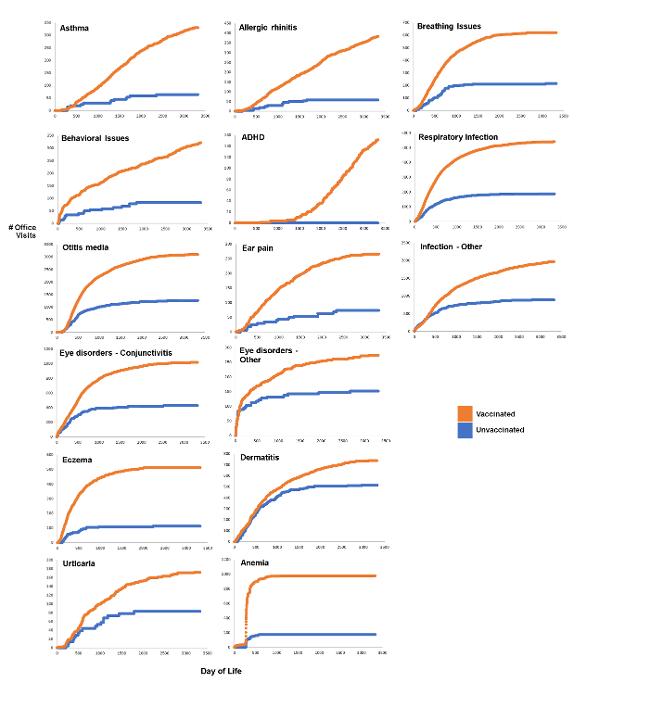
If you start looking into what is actually in those vaccines, you soon find that they contain all kinds of unhealthy stuff, not really related to the vaccine itself. Thus, it should be no surprise that the result of injecting all kinds of unhealthy stuff into your babies is that they have all kinds of health issues afterwards.
In the interest of providing good examples, here is a video from YT about “how to be a good wife.” Because, if you are not a good wife, then you are probably a bad wife, making some guy miserable for no good reason.
I haven’t watched this video, but this woman is apparently a homeschooling mother of eleven (!), and you can see the results of her effort with her daughter on the right. Can I also say that, as a housewife in her mid-fifties, she looks great?
In the TJed homeschooling method, which is very ambitious, “Scholar phase” includes about 5000-8000 hours of study of high-quality materials. Most people never get this, even those that go to top boarding schools and universities. So, it is recommended that parents who take this seriously give themselves the kind of education that they want to impart on their children. This means about 5000 hours of study. The TJed people recommend that this take the form of about 2 hours a day of study (mostly, reading books), Monday-Friday, or about ten hours a week, fifty weeks a year, for a decade.
Yes, you study two hours a day for a decade. You don’t have to, but the kind of parent who thinks this sort of thing is important for their child, is also the kind of parent who thinks it is important for themselves. So, if you are a young mother thinking about elite-level homeschooling of your children, this is something to begin thinking about, and then, actually doing. Being a full-time Mom isn’t just about cooking and cleaning anymore, is it? Once you start down this path, you will discover how poorly-educated most people are, including those that graduated from top universities.
Many homeschooling Moms do this while their own children are studying. So, while the child is reading Little House on the Prairie, Mom is reading The Spirit of the Laws.
The duties of a first-class mother of infants and toddlers are, for the most part, not so hard. You mostly just feed them and change their diapers. It doesn’t have the complexity and subtlety of homeschooling. Nevertheless, here are some principles, for the period from birth to about the fifth birthday:
Breastfeed. If you aren’t breastfeeding, then you are feeding them chemical factory food, quite likely made from GMOs. Here is a label from a popular brand of baby formula. Avoid this horrible crap.
Music or Silence: Have a house without “noise.” Music (something good and worthwhile, whether actual music, or reading or talking), or silence. Not the silence of outer space, but the silence of nature, like a park or garden. Common forms of “noise” in the house include: popular music constantly on, television and road noise. It also definitely includes toys that have some kind of electronic noise, which is very common today. All our toys are silent.
Have a pretty house. For some reason, moms assume that if you have children, then the children’s mess dominates the house. Children often make a mess of their toys and playthings, but then you clean up and put them away. Even if your house is modest, keep it clean and decluttered. Have a place where the toys get put away at the end of each day. Try to keep toys from accumulating too much. Toys that the child has outgrown, or just never showed much interest in, can be given to younger children or donated. “Noise” includes “visual noise” — clutter and mess. Your house should look like “music.” I don’t like toys and other children’s stuff with garish colors.
A child-safe area. As you child begins to walk, set up an area that is child-safe. Children need a place where they can fool around and play, and not have to hear “don’t do this/don’t touch that” all the time. Fencing and gating can help here.
Child-size things. As children get a little larger, ages 2-5, they can be given child-size things that are easy for them to handle. Probably everyone has some child-size cups or spoons. Child-size furniture is also nice, including perhaps a cabinet with child-size drawers that can be easily opened with big handles. Children like to have a place where they can keep their things.
Keep your baby by you while sleeping. Separating an infant into a separate bedroom is unnatural. Keep your baby near your bed, in a bassinet or at least a crib in the same bedroom.
No screens. It doesn’t take long before moms learn that children are fascinated by video screens. It keeps them quiet for hours. It is very tempting but … don’t do this. I wouldn’t give children screens (tablets, televisions) until maybe age 6 — including “children’s” entertainment, and especially “educational” programs. One problem today is that children often have tablets, which they hold perhaps 8″ from their eyes (they have short arms). This can be very bad for developing eyes.
Avoid wifi. If you can, turn off the wifi. Use internet via Ethernet and USB (cable) if you want to. Microwave radiation (wifi) is particularly bad for children. Many countries ban wifi in schools.
No vaccines. Read up on vaccine damage. I would avoid all vaccines. There are way too many children today with autism and various autoimmune disorders including allergies. When I was a child, people weren’t allergic to peanuts. If you want, you can delay vaccination to at least age 2 or maybe age 6. Vaccines are much riskier, the younger a child is. If you say you are “delaying” vaccination, it can go a lot better with doctors and relatives who think you should vaccinate your children. Also, it gives you six years to learn about the problems of vaccines. For a long time, Japan had no vaccination before age 2, due to the potential damage it can cause. Japan still bans the MMR vaccine due to problems 2000x above normal. There is almost no chance of getting a once-common infectious disease today, even without vaccination. The last known case of polio among a U.S. resident was in 1978. The last known case of polio in all of North and South America was in 1991. Occasionally there are outbreaks of measles, with “hundreds of cases” loudly promoted in the media, and the infected children are, rather suspiciously, those that have recently been given the measles vaccine. What they don’t tell you is that the number of deaths from measles in the U.S., from 2000-2020 (twenty years), is apparently a grand total of: 2. Not 2 per year, just 2. Mortality from nearly all infectious diseases plummeted after 1930, mostly due to better public sanitation and healthcare, and were already at very low levels before the introduction of vaccines.
Good food. Homecooked meals from natural single ingredients. Lots of fruit and vegetables. Eat together as a family every day. Children generally eat the same food as adults (possibly avoiding spicy foods at first). They don’t get to choose. Avoid too much “kids foods,” like a constant diet of cookies, ice cream, hot dogs and pizza. Healthy stuff only.
Get outside in a natural environment. The best place is somewhere naturalistic, like a park or garden, but also a place where moms don’t have to say “don’t do this/don’t go there” all the time.
Play with other children. As children get a little bigger, from about 6m onward, and definitely from about 2yrs, they should be with other children pretty much every day.
If your child is driving you crazy, you aren’t doing it right. Motherhood is not mom and baby alone in the living room for 10 hours straight. That will definitely drive you nuts. The pattern of “parents playing with children” is fine for 20 minutes, but not for longer periods of time. Children play with other children for 10 hours straight, while Mom keeps them out of trouble and feeds them. That is the basic pattern.
Trade off childcare with other Moms. Children can play with other children for 10 hours, every day, but moms probably don’t want to make small talk with other moms for 10 hours, every day. “Playdates” are not so good. If you formalize this process, you might even set up a “daycare co-op” with ten other families, to have a place for the children to play every day, while moms take turns overseeing them. I met one person who set up a co-op like this. They even rented some space that they could use every day. Another friend formed a “mom’s club” of about 5 moms that got together four days a week.
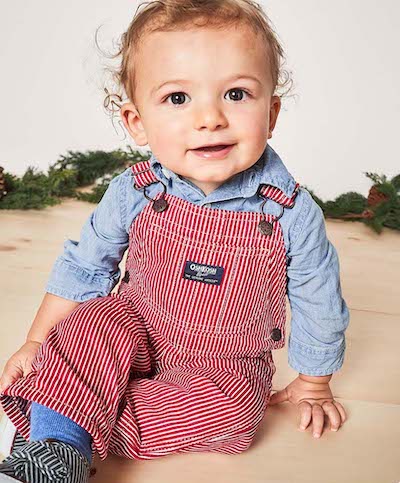
Dress your children well. Nice clothing for toddlers doesn’t cost much. Yes, they will get it dirty — so what? Toss it in the laundry. If you ask around, you can probably get clothing from other moms whose children have outgrown them.
These are some product photos from Oshkosh.com. Companies like Oshkosh or Carter’s are making tons of very nice children’s clothes, and they often cost less than $10 after discounts. The only difficulty is getting parents to actually use the very nice things available. There’s no reason to be a slob. “No t-shirts” for boys and “no tights” for girls is a good rule.
Forget about “school.” Avoid all “school”-type studying at young ages. Studies have shown that pushing children toward “studying” at an early age (before age 5) not only provides no benefit, but it actually produces worse results! You can do a little bit around age 4 (but not earlier), such as the 26 letters and 10 digits. You might try to practice a little reading around age 5. But, this would be about 15 minutes a day, no more. And, if you just skip it, that would be fine too. In the past, children would often have no schooling until about age 8, when their brains have developed enough to process abstract information like words and numbers. Some children will begin to do a little reading from about age 5, but if they don’t, no big deal. Children who begin to read at age 5, and those that begin to read at age 9, have the same reading ability at age 12. The common pattern among homeschoolers is much less study before about age 8, and much more study after age 12.
Read to them. Parents reading to children is OK, from an early age. These should be books that are age-appropriate for the child. The Very Hungry Caterpillar or Elephant and Piggie, not To The Lighthouse. Look into Mother Goose, or Aesop’s Fables. Sing songs.
This is study time for Mom. You have a few years to get up to speed on homeschooling. Read books about homeschooling, and continue expanding your own education. Give yourself the kind of education that you want to give to your children — which is probably different than the education you got when you were a child. When they are around age 10-12, they are going to be doing a lot of reading. You need a long head start. “You not Them.”



 Cornerstone